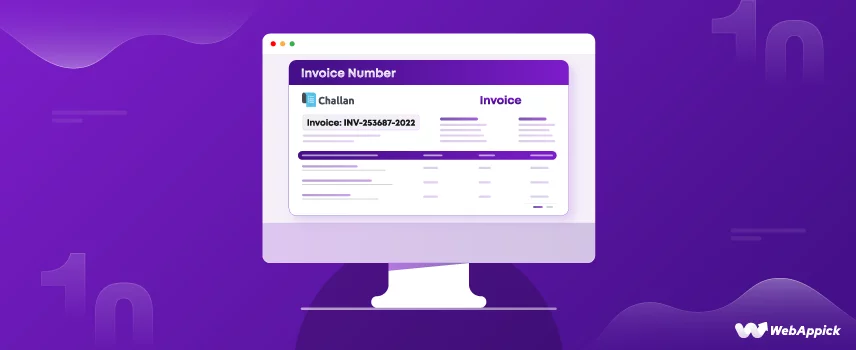
WooCommerce does not generate structured invoice numbers on its own. To create and customize a WooCommerce invoice number, install an invoicing plugin such as Challan, which adds a sequential invoice ID, custom prefixes and suffixes, and order-based attributes to every invoice automatically.
In this guide, you’ll set up basic invoice numbering with the free version, then customize prefixes, suffixes, and numbering formats with the Pro version.
What Is an Invoice Number?
An invoice number, also called an invoice ID or reference number, is a unique identifier assigned to each transaction. It can be purely numeric or a mix of letters and numbers.
In WooCommerce, this number is separate from the order number and needs its own generator because tax authorities generally require invoice numbers to be sequential and uninterrupted, while WooCommerce order numbers are not.
How to Generate WooCommerce Invoice Numbers Using Challan (Free Version)
- From your WordPress admin panel, go to Plugins > Add New Plugin.
- Search for “Challan” and click Install, then Activate.
- Place a test order. Challan generates an invoice number and PDF invoice automatically and attaches it to the order confirmation email.
- Check the invoice. The default sequence starts at 1, so your first invoice will show invoice number 1, the next order will show 2, and so on.
- Customers can also download their invoice from the My Account page or the order confirmation screen.
- To set a custom starting number, go to Challan > Settings > Order Settings.
- In the Next Invoice No. field, enter one less than the number you want to start from. For example, enter 100 to make your next invoice number 101, then save your changes.
How to Add a Prefix or Suffix to a WooCommerce Invoice Number
In the same Order Settings panel, you’ll find two additional fields alongside Next Invoice No.:
- Invoice No. Prefix: text added before the invoice number, such as a store code or year.
- Invoice No. Suffix: text added after the invoice number, such as a SKU code or year.
For example, setting the prefix to “WST-” and the suffix to “-2026” on invoice number 101 produces “WST-101-2026.” Save your changes and place a test order to confirm the format.
How to Customize Invoice Numbers With Challan Pro
Challan Pro adds a dedicated numbering system with more control over format. To use it:
- Go to Challan Pro > Invoice and scroll to the Invoice Number section.
- Choose a numbering type from the dropdown:
- Order Number: the invoice number matches the WooCommerce order number exactly.
- Prefix + Order Number + Suffix: adds custom text or date macros around the order number.
- Prefix + Custom Sequence + Suffix: uses its own independent sequence, set through the Next Invoice No. field, with optional prefix and suffix text.
- For date-based prefixes or suffixes, use the built-in macros:
{{day}},{{month}},{{year}}. - Save your changes and generate a test order to confirm the invoice number matches the format you selected.
Invoice Number vs. Order Number: What’s the Difference?
WooCommerce order numbers come from WordPress’s internal post ID system, which counts every post type, including pages, products, and images, not just orders. That makes order numbers skip around instead of running in a clean sequence.
An invoice number is a separate, purpose-built identifier generated by your invoicing plugin, which is why most tax authorities require it instead of the raw order number for financial records. Challan can generate this separate invoice numbering sequence independently of the order number, or, if you prefer, mirror the order number directly using the Order Number setting described above.
8 Best Practices for WooCommerce Invoice Numbers
- Sequential numbering: keep invoice numbers in order without gaps, since this is a common tax requirement.
- Prefix or suffix by category: use a tag like “2026-” or “INV-” to identify invoices by year, client, or project at a glance.
- Match numbering to your workflow: configure prefixes, suffixes, and sequences to fit how your store or clients expect invoices to look.
- Check local tax rules: invoice numbering requirements vary by country, so confirm what applies to your business.
- Automate the process: use a plugin instead of manual entry to avoid duplicate or skipped numbers.
- Skip unpaid orders: only assign invoice numbers to completed transactions so gaps don’t appear from abandoned carts.
- Use international formats where relevant: ISO 8601 date formatting helps with recognition if you invoice internationally.
- Test before going live: place a few sample orders after any settings change to confirm the format is correct.
Best WooCommerce Invoice Plugin
Challan is a WooCommerce PDF invoice plugin built by WebAppick, also the makers of the CTX Feed product feed plugin. It automatically generates PDF invoices when an order is placed, attaches them to order confirmation emails, and lets customers download their invoice from the My Account page.
The free version covers invoice number sequencing, prefixes, suffixes, and basic templates. The Pro version adds custom numbering formats, GST-compliant invoicing for Indian stores, ZATCA-compliant e-invoicing for Saudi Arabia, packing slips, shipping labels, and multi-language invoice generation.
Key Features
- Custom invoice number sequences, prefixes, and suffixes.
- Auto-attach invoices and packing slips to order emails.
- Brand elements such as logo, custom notes, signatures, and paid stamps.
- Custom fields and product attributes on the invoice template.
- Bulk invoice download by date range or order status.
- Pro-only: GST and ZATCA-compliant invoice formats, credit notes, and proforma invoices.
Pricing starts from a free version with core invoicing features; Pro plan pricing is listed on the official WebAppick pricing page. Check current pricing and plan details before purchasing.
Frequently Asked Questions
How do I automatically generate invoice numbers in WooCommerce?
Install an invoicing plugin such as Challan. Once activated, it generates a sequential invoice number for every new order automatically and attaches the invoice PDF to the order confirmation email. No manual entry is required.
Should WooCommerce invoice numbers be sequential?
Yes. Sequential, uninterrupted invoice numbering is the standard practice and is often required by tax authorities for accurate financial reporting. Skipping unpaid or abandoned orders when assigning numbers helps keep the sequence clean.
How many digits should an invoice number be?
There’s no universal standard. Some businesses use as few as 5 digits, others use 10 or more, depending on expected order volume and local regulations. The only firm requirement is that each invoice number must be unique.
Is the invoice number the same as the order number?
No. WooCommerce order numbers come from WordPress’s post ID system and can skip around because they count all post types, not just orders. An invoice number is a separate, dedicated sequence generated by your invoicing plugin, which is what most tax authorities expect to see on financial documents.
What is an invoice ID?
Invoice ID is another name for invoice number. It’s a unique reference assigned to each invoice so a specific transaction can be identified, tracked, and referenced for tax or record-keeping purposes.
Can I change the invoice number in WooCommerce?
Yes. With Challan, go to Settings > Order Settings and update the Next Invoice No. field to the number you want the next invoice to use. Future invoices will continue counting up from that number.
Key Takeaways
- WooCommerce has no built-in invoice numbering system, so a plugin like Challan is required to generate structured invoice numbers automatically.
- An invoice number and a WooCommerce order number are not the same thing. The order number comes from WordPress’s post system and isn’t sequential; the invoice number is a separate, dedicated sequence.
- The free version of Challan covers basic sequencing, prefixes, and suffixes. Challan Pro adds custom numbering formats, order-number-based invoicing, and date macros.
- Sequential numbering without gaps is standard practice and often a tax requirement, so skip unpaid or abandoned orders when assigning numbers.
- There’s no fixed digit count for invoice numbers. What matters is that each one is unique and consistent across your records.

Free version on WordPress.org. Every Pro licence includes a 30-day money-back guarantee.