A Google Shopping ads feed is a structured product data file that contains all essential product attributes, titles, descriptions, prices, images, GTINs, availability, and categories, formatted according to Google Merchant Center feed specifications. To create one for WooCommerce, you generate this file from your product data and upload it to Google Merchant Center, which then uses it to run Shopping ads across Google Search, YouTube, Gmail, and partner networks.
WooCommerce store owners can automate this process using a feed plugin like CTX Feed, which includes a dedicated Google Shopping ads feed template with all required attributes pre-configured.
This guide covers how to create, configure, and upload a Google Shopping ads feed, connect it to Google Ads, and launch a Shopping campaign.
How to Create Google Shopping Ads Feed in WooCommerce
CTX Feed is a WooCommerce product feed plugin that generates Google Shopping ads feeds and feeds for over 220 other channels. It includes a built-in Google Shopping ads feed template, so you do not need to configure attributes or manually map feed specifications.
Step 1: Install and Navigate to Feed Creation
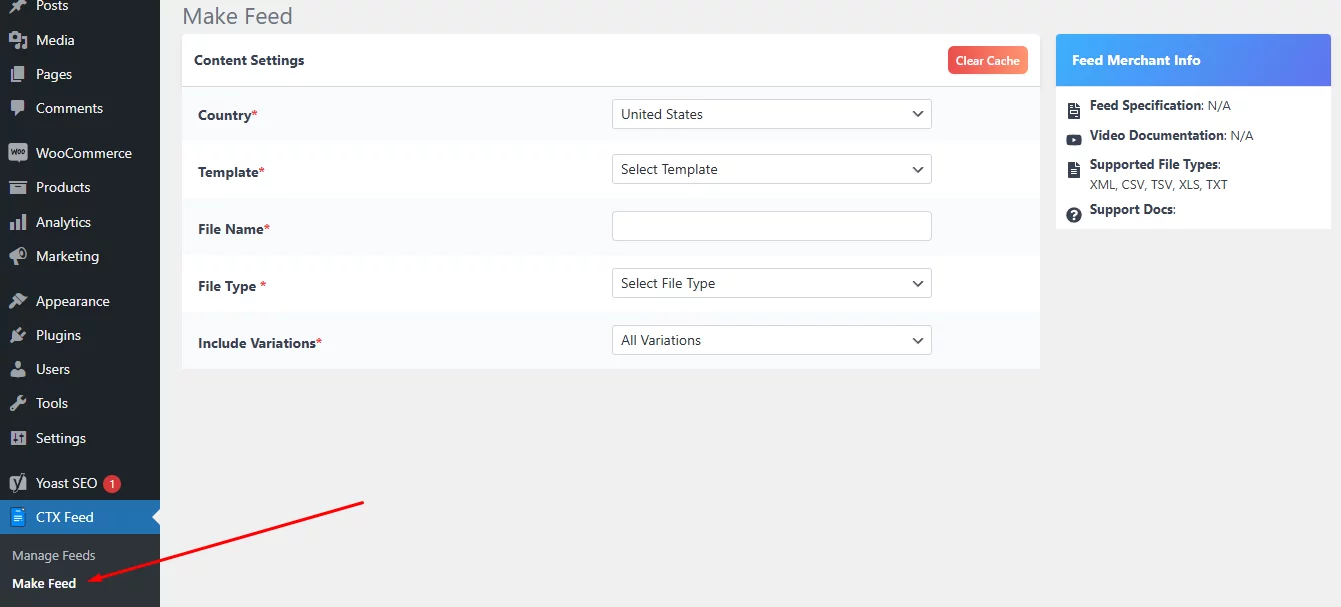
After installing the CTX Feed plugin, head over to CTX Feed >> Make Feed. Here’s where the magic begins.
Step 2: Choose the Perfect Template
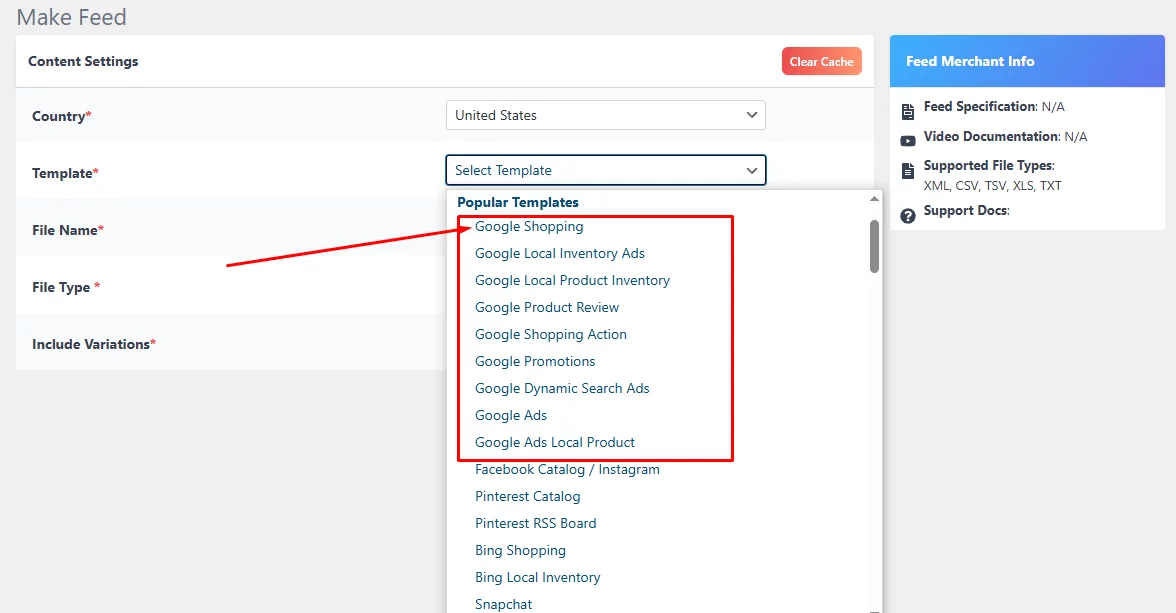
The Templates dropdown is like a treasure chest filled with over 130 channel-specific templates. For this guide, let’s focus on the core Google Shopping template.
Step 3: Watch the Magic Unfold
As soon as you select the Google Shopping template, the plugin starts doing its thing. In an instant, it populates all the essential attributes you need at the bottom of the screen.
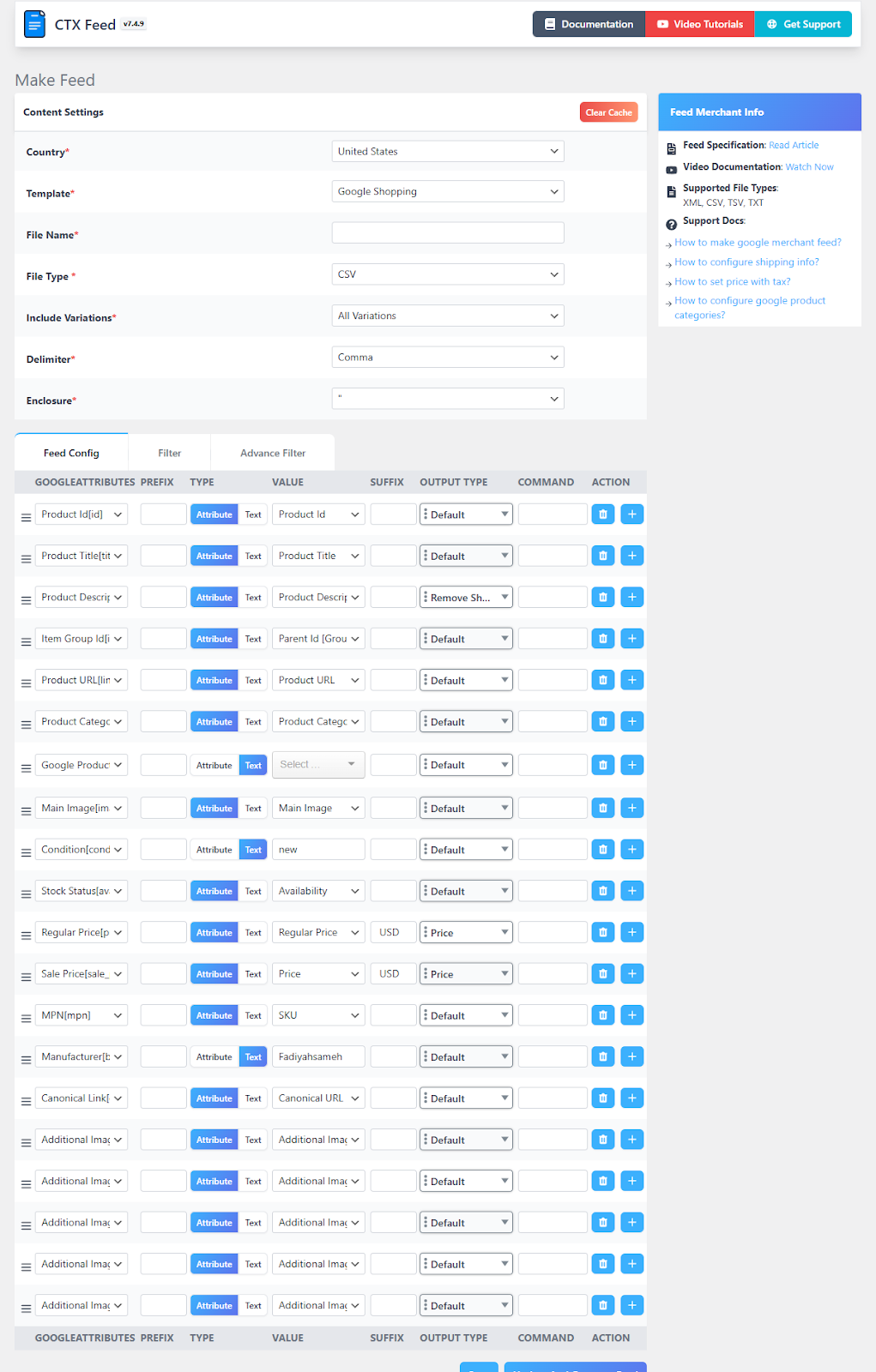
Step 4: Fine-Tune Before You Feed
While it’s tempting to hit the Update and Generate Feed button right away (which would gather all your WooCommerce product data and create the feed), there are some crucial steps left.
To ensure your feed aligns perfectly with Google Shopping’s guidelines, some adjustments are needed before generating the feed.
Configuring Additional Fields in the Google Shopping Ads Feed
WooCommerce has recently introduced a dedicated field for GTIN, UPC, EAN, or ISBN. However, you cannot input two individual unique identifiers in this field when needed.
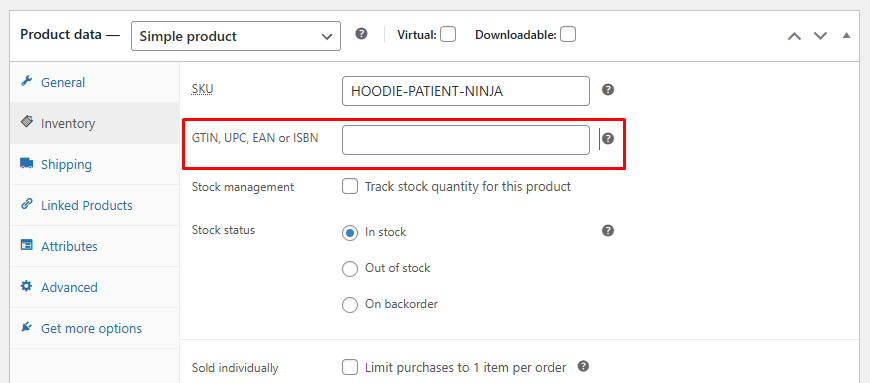
Also, there’s no field available to insert data for Brand or MPN. But they are essential for Google Shopping ads feed. What to do?
We all know that WooCommerce allows us to add custom fields to product pages, and that’s our solution for adding the above fields to our feed. If you don’t add custom fields on product pages and choose to insert the values manually in the feed, you will have to keep updating them manually onwards.
Therefore, it is best that you add custom fields for them and let CTX Feed collect them automatically. So how do you add them?
No need for additional plugins; CTX Feed has got your back. It comes packed with all possible custom fields you may need and even more to add within a toggle of a setting.
Go to CTX Feed >> Settings and click on the Custom Fields tab.
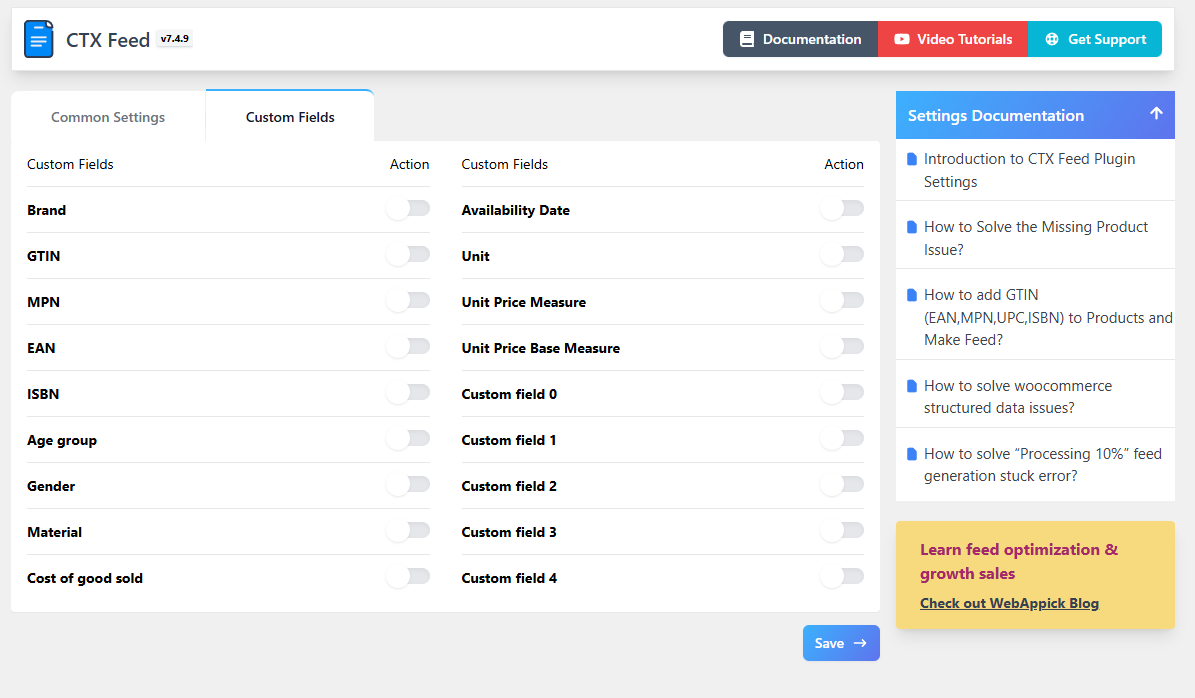
Toggle to enable the ones you need. For the Google Shopping feed, we need to enable GTIN, MPN, and Brand.
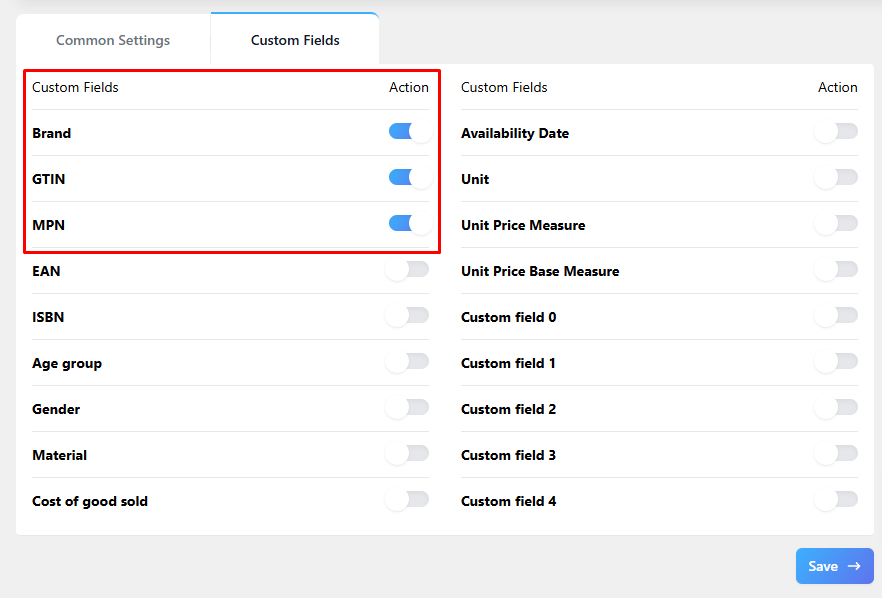
Save your settings. Now, you can go to your product pages and add GTIN and MPN values. For example, go to a product page and jump to the Product Data >> Inventory section.
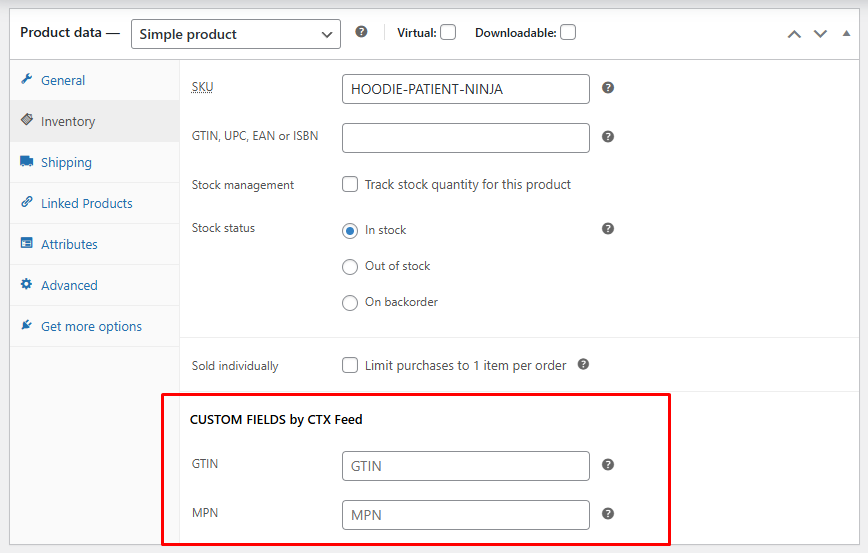
As you can see, the plugin has created individual fields for inserting data values. When you input data here, CTX Feed will automatically add it to the feed.
How about Brands?
Scroll down and you will find the Brand By CTX Feed section at the right. You can create or assign brands from here.
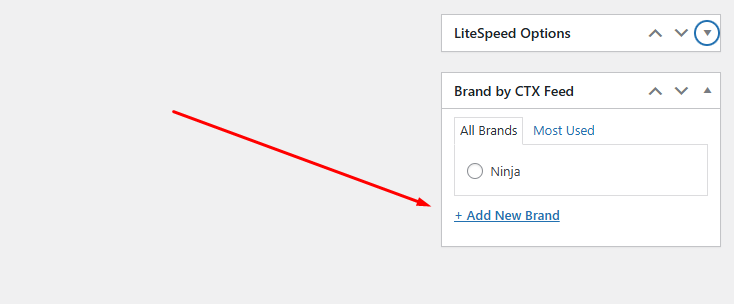
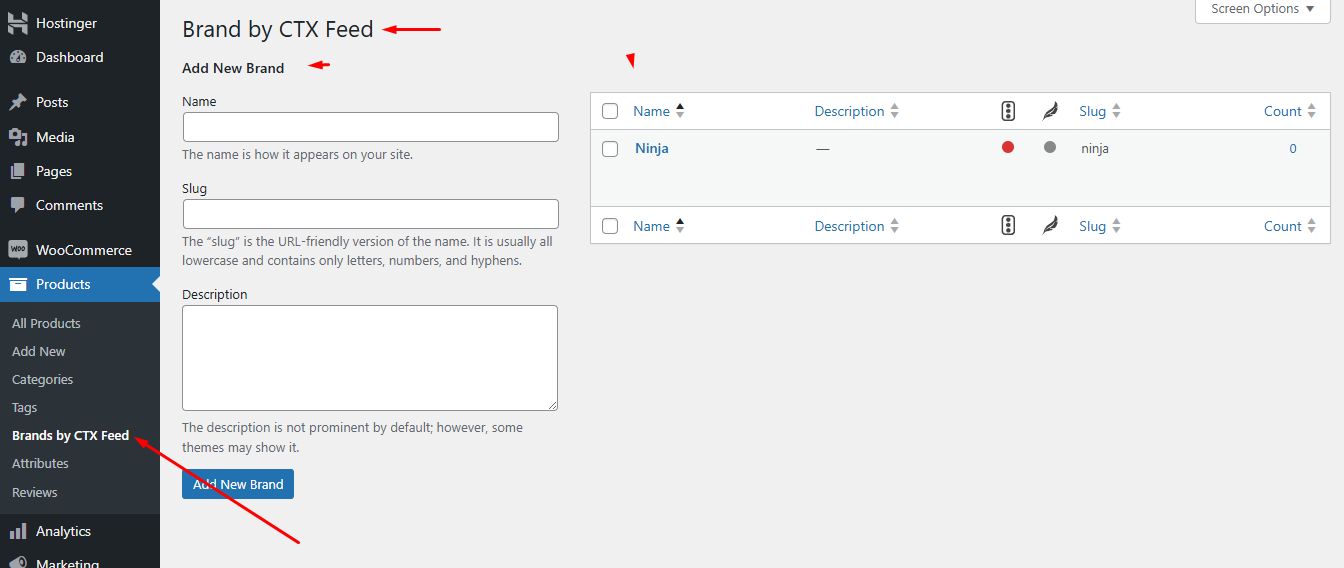
To create Brands in bulk, go to the following menu.
Category Mapping for Google Shopping ads feed
If you generate and upload the feed right now, GMC will return some Google Merchant Center feed errors. It will ask you to map categories according to Google’s recommendations.
Every website has its own site or category structure. If you are trying to upload your products to those websites, your products should also align with their category distribution.
For example, let’s say Google has a clothing category structure like – Apparel & Accessories > Clothing. If your clothing products or product feed doesn’t have or match this category, then Google will show errors and will not display your products.
In simple words, your products should either have the same categories as the host (e.g., GMC), or your product feed should map the categories to match the host.
Sounds complex, right?
Here comes CTX Feed to your rescue again. The plugin makes it incredibly easy for you to map categories according to different channel structures.
Go to CTX Feed >> Category Mapping.
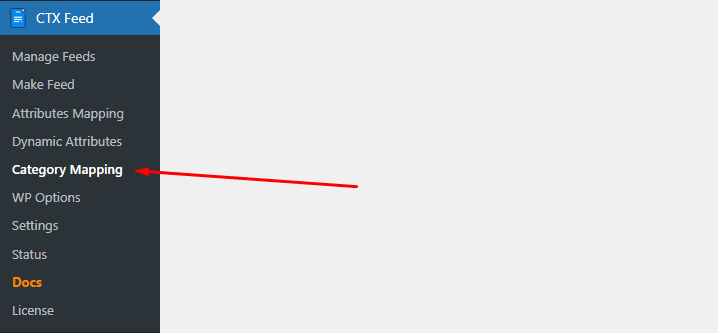
Hit the New Category Mapping button, and the following window will pop up.
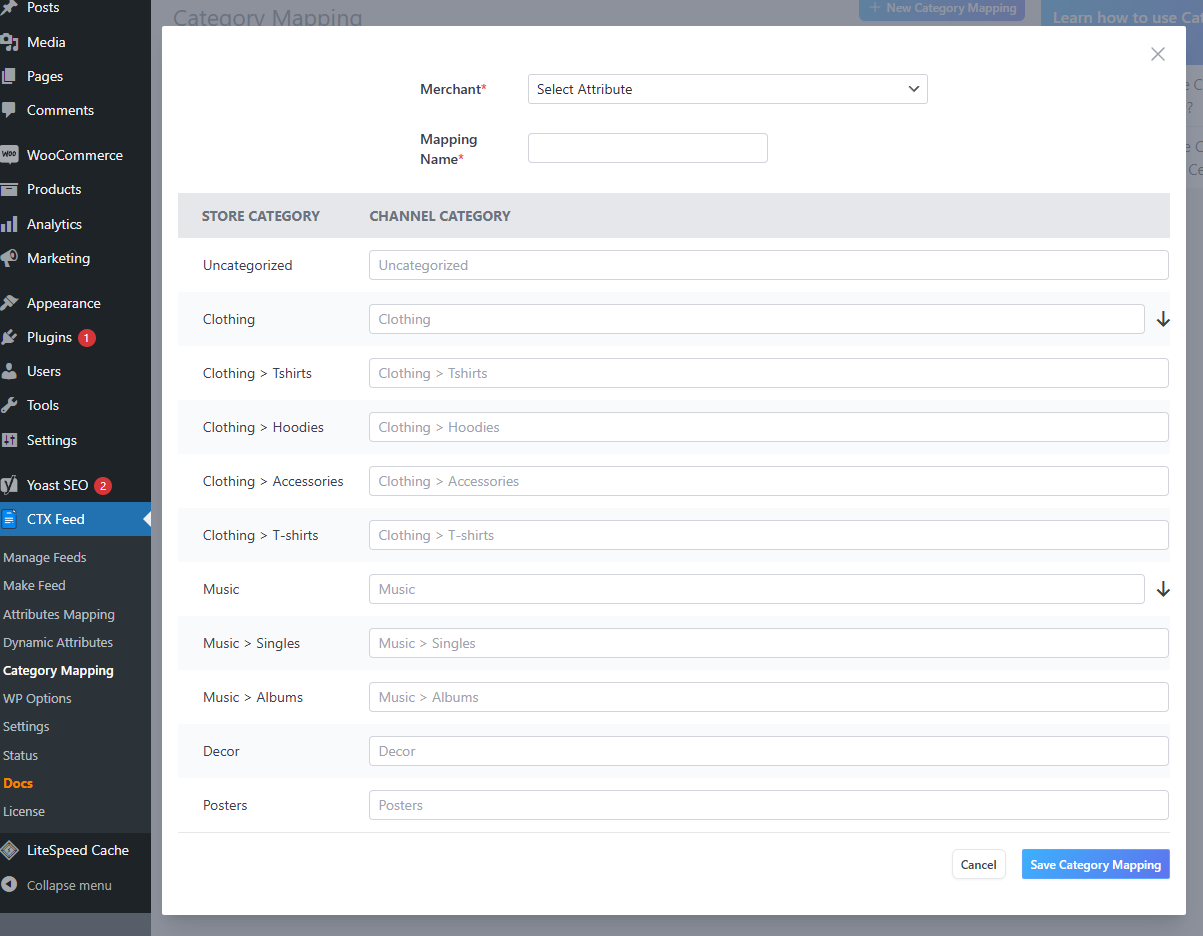
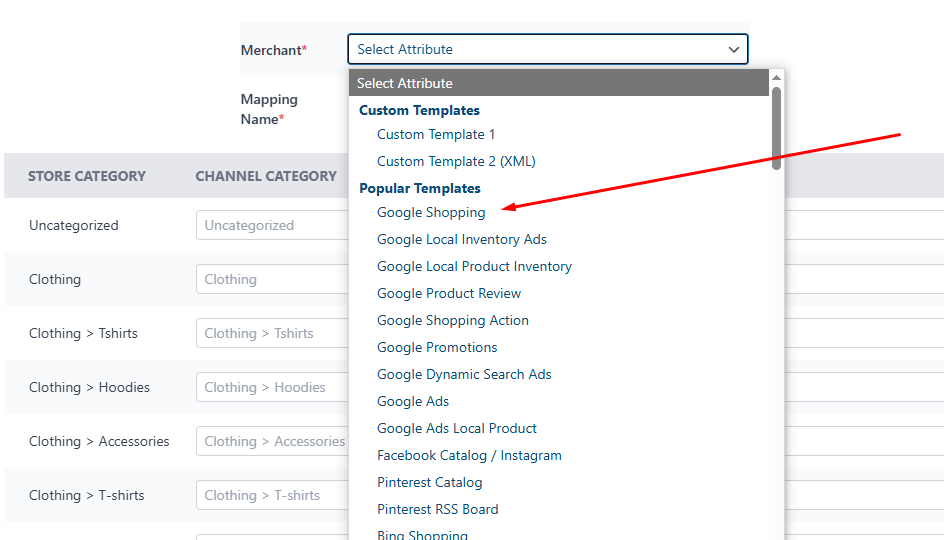
Select your merchant, which in our case is Google Shopping.
Input a name. The plugin automatically collects your existing categories and displays them on the left; you need to map them with Google’s categories on the right.
For example, let’s map Google’s matching category for your category Clothing.
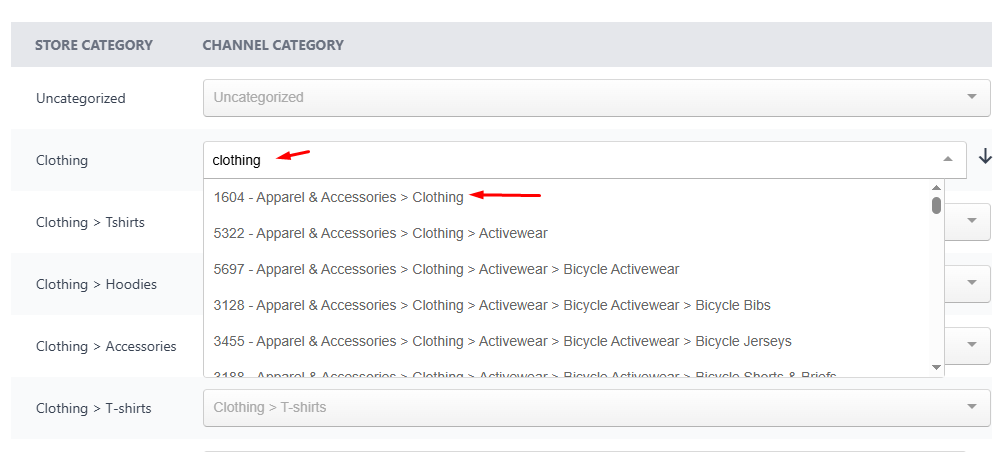
Type ‘clothing’ into the box, and you will find all available Google categories related to it. Select the that best matches your products.
Again, you can see how rich CTX Feed is. It has integrated all channel categories for you to map.
Here’s how it may look after you map all your categories.
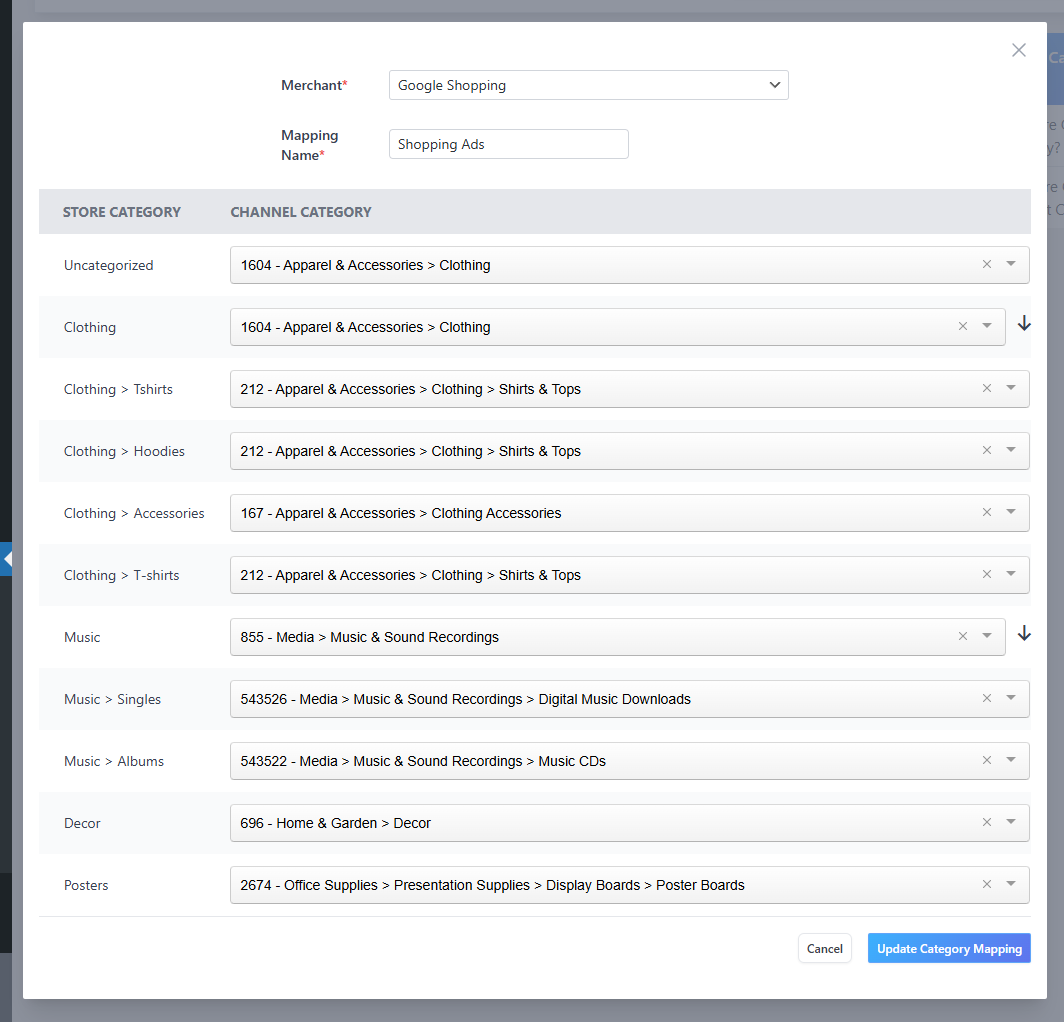
Generating and Filtering Google Shopping Feed
Now that we have performed all necessary background tasks, it’s time to create the feed. Let’s go back to the feed window.
You don’t need to edit or add any attributes. However, you should assign the mapped category attribute you created.
Scroll down to the Google Product Category attribute. If you only have one single category, you can assign it directly from the Value window under Text type.
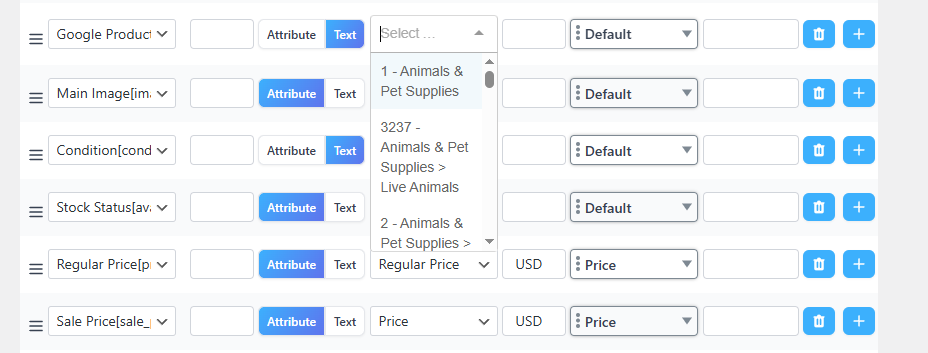
We have multiple categories, and we have mapped them already. So, we will select the Attribute option and select our custom category mapping attribute from the list.
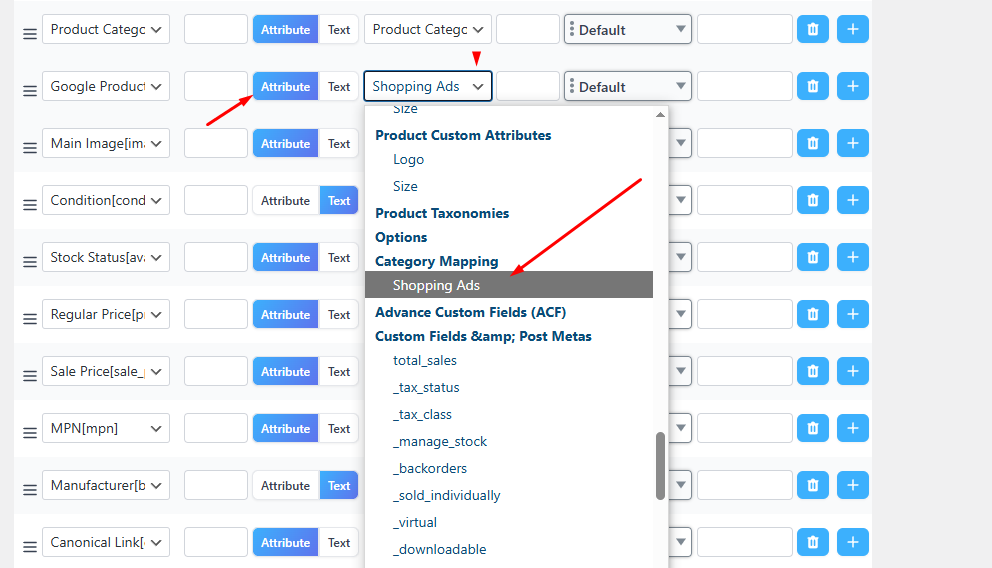
You can go ahead and hit the generate button at the bottom to create the feed now. If you want to apply more filters, you can do so from the Filter options.
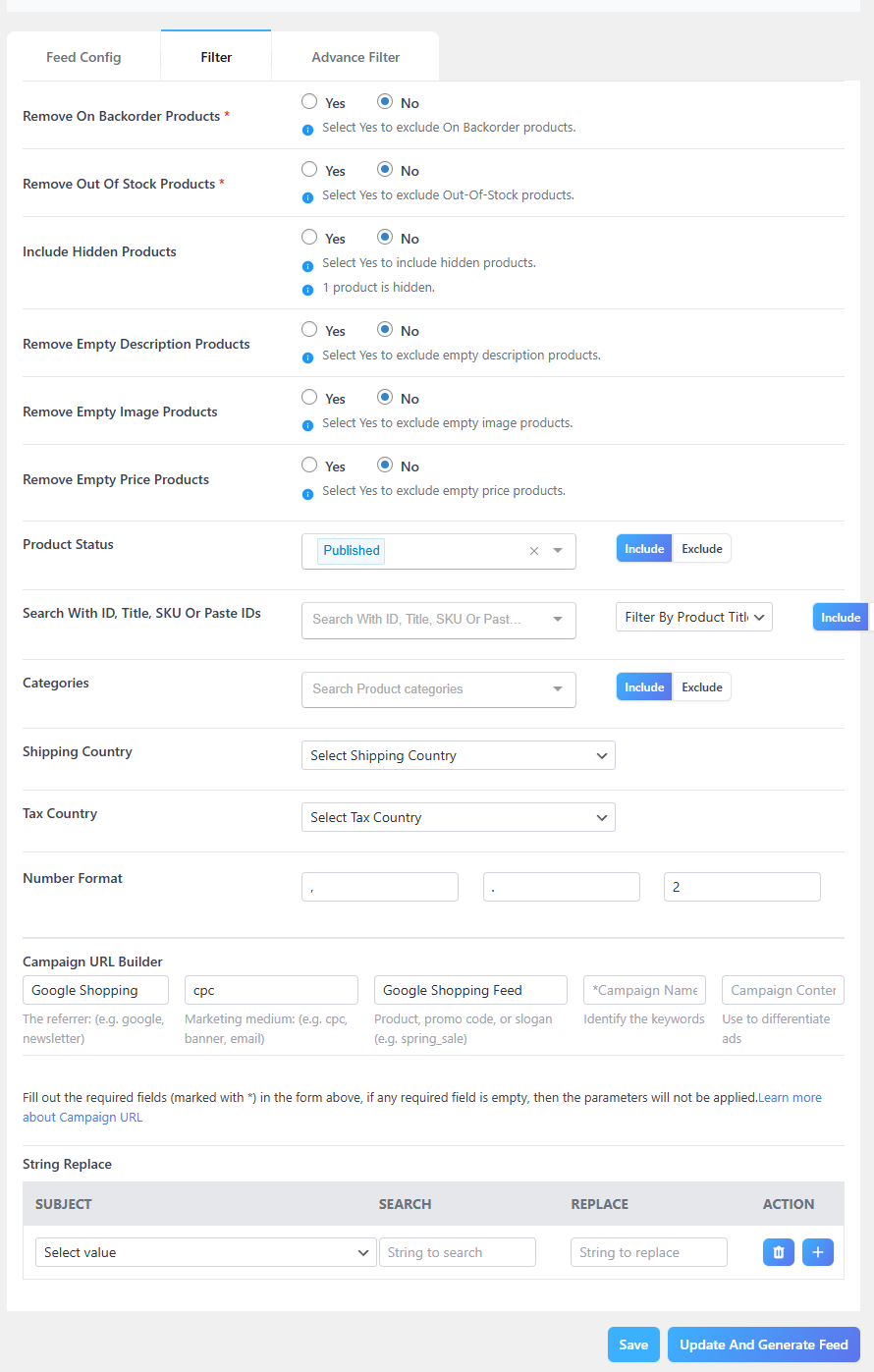
CTX Feed offers a wide range of useful filters. Most important one you will need is – Remove Out Of Stock Products.
With just a click, you can exclude all your stock-out products from your Google Shopping listings and ads. This will prevent you from misleading the audience and wasting money on unnecessary ad spending.
With other filters, you can include exclude specific categories or even specific products by their status, ID, SKU, etc. You can also filter by shipping and tax country and create tracking URLs to monitor your feed and ad performance.
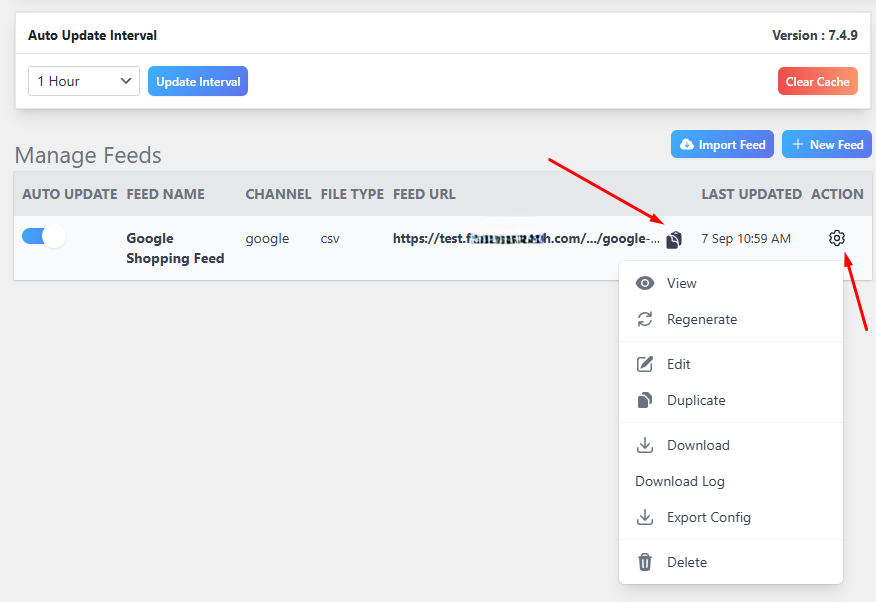
To edit or modify the feed you created, go to CTX Feed >> Manage Feeds.
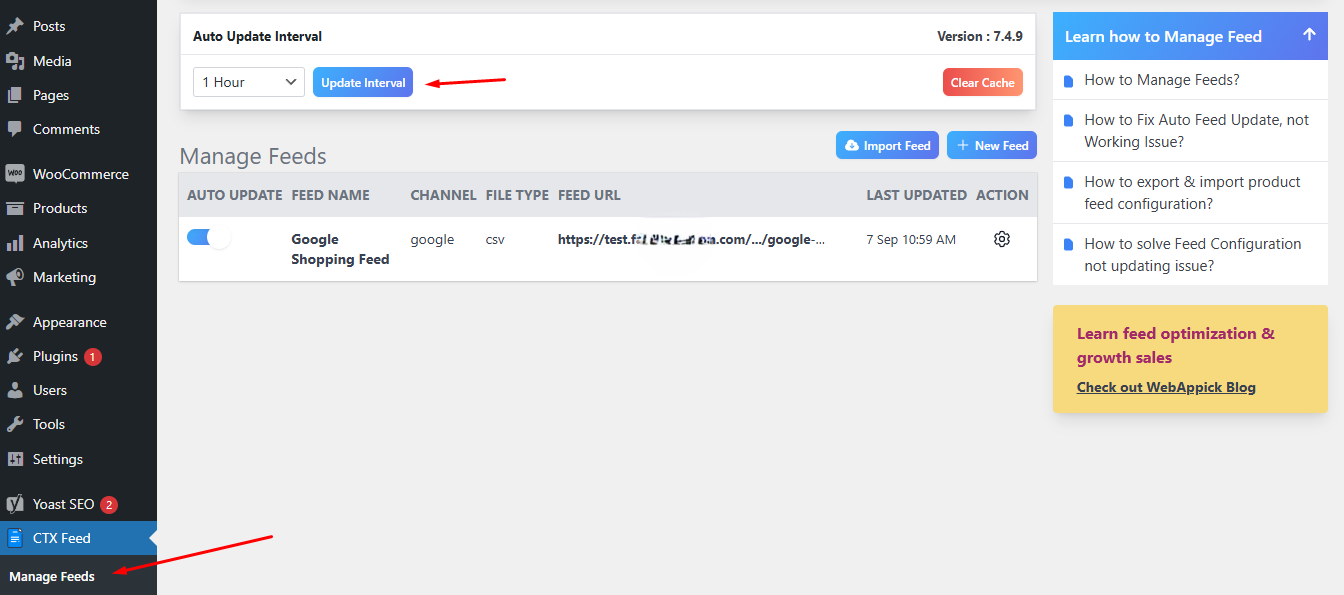
This page allows you to clear the cache (very handy when applying several changes, such as category mapping). One mighty important feature is the Update Interval, which lets you set the interval after which the plugin will automatically surf your WooCommerce site for changes and update the feed.
You can copy the URL from the feed settings. Other options include –
How to Upload Your Google Shopping Ads Feed to Google Merchant Center
Log in to your Google Merchant Center account. Go to Products > Add Product Source and select Add Products from a File. Paste your Feed URL into the URL field.
You can also set an automatic fetch schedule in GMC. This controls how often GMC retrieves the latest version of your Google Shopping ads feed from the feed’s URL. Set both the CTX Feed update interval and the GMC fetch schedule so product changes sync to your listings consistently.
Once GMC successfully fetches your products, it begins distributing them across Google Search, Google Shopping, YouTube, Google Images, Google Maps, and millions of Google partner sites.
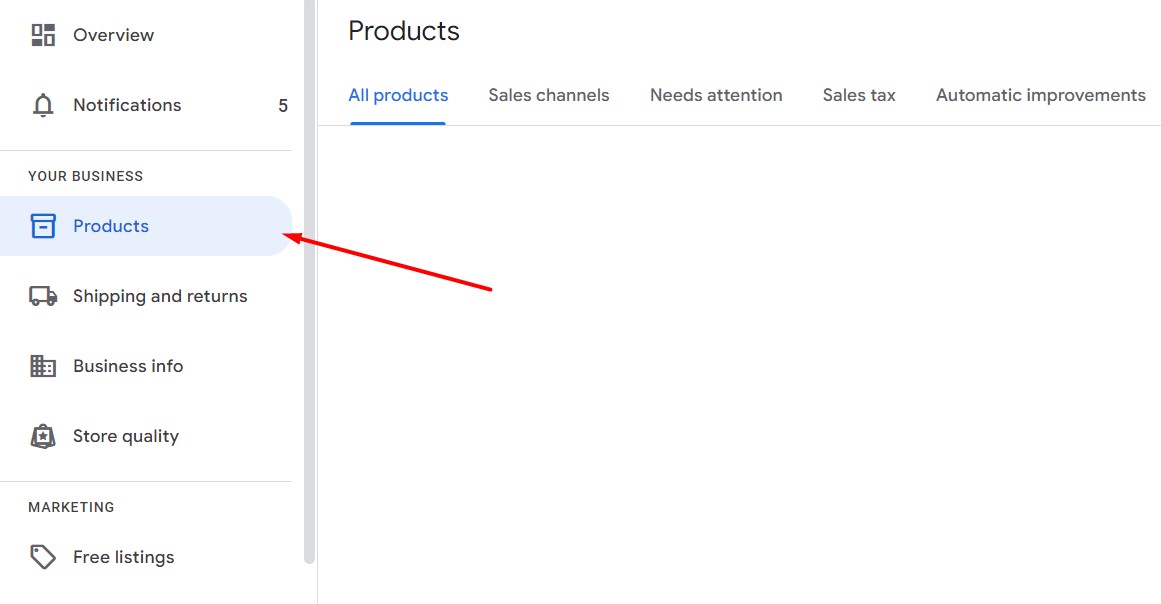
We will select the Add Products from a File option and paste our feed URL in the following box.
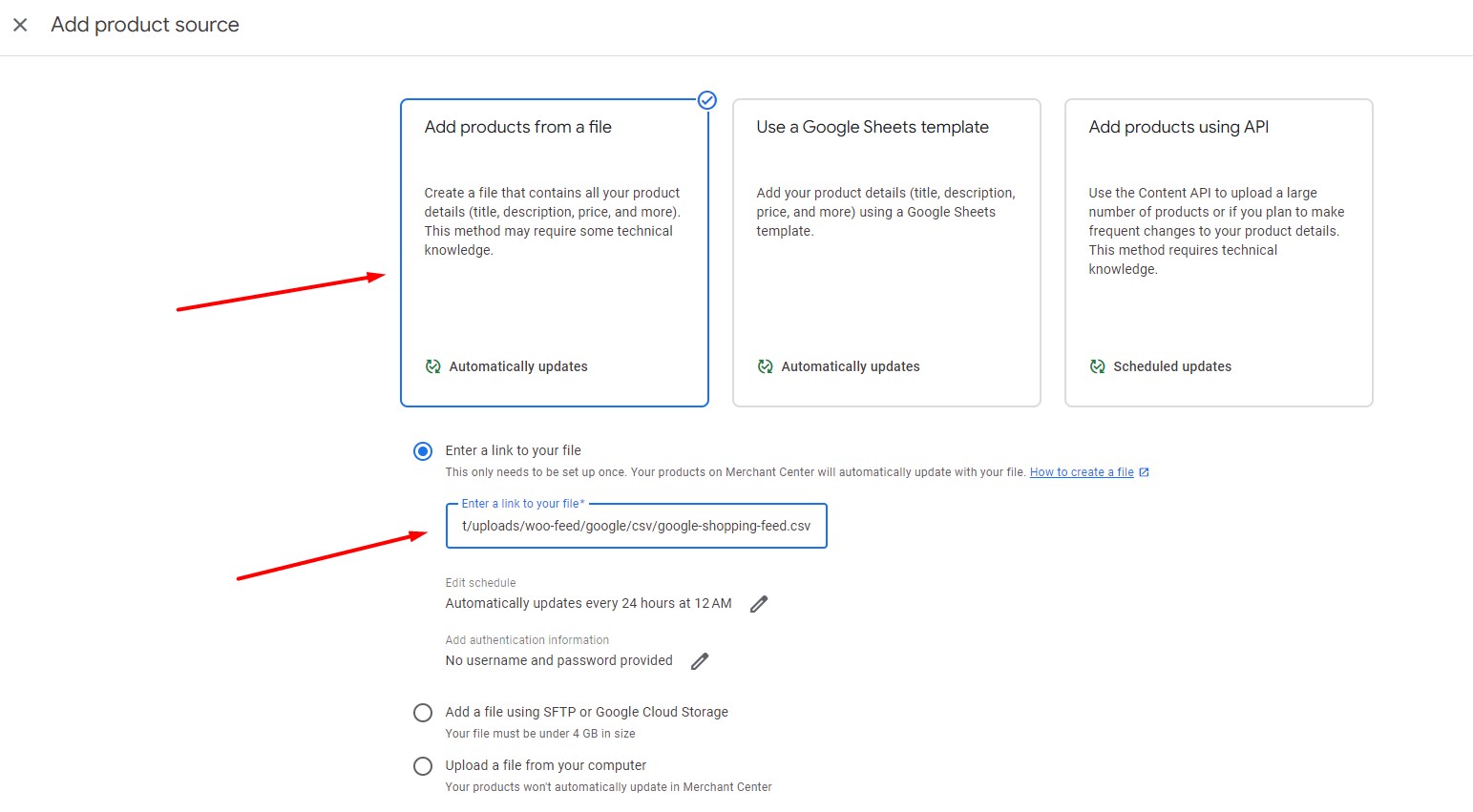
From here, you can also set the automatic update interval and input the feed user name and password if they are protected by any such.
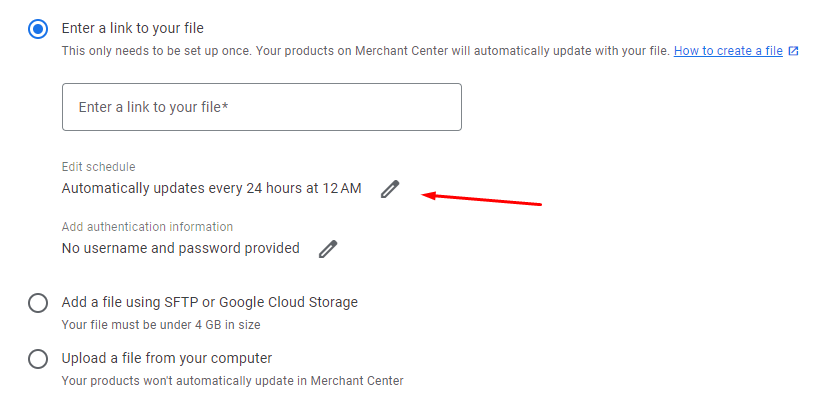
Now, what’s this update schedule in GMC, and how is it different from the one we saw in CTX Feed?
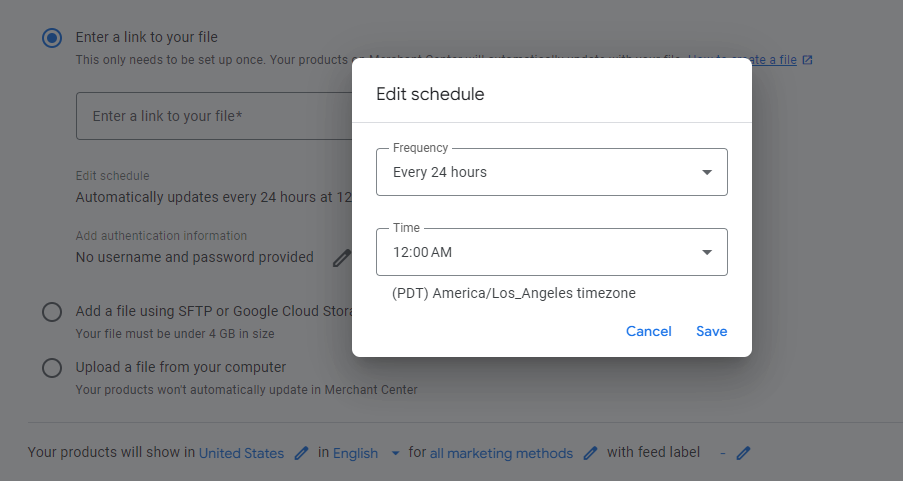
Let’s explain.
- The update interval in the CTX Feed is for checking and updating any product data you may have changed during the interval period. For example, if you have set an update interval of 1 hour and changed the price of a product, CTX Feed will surf your site and find the update automatically. After that, it will automatically update the feed according to the update interval.
- The GMC update schedule is for checking if you have made any changes in the feed. As you have connected the feed through a URL, GMC will fetch the updated feed with the changed price from CTX Feed according to your set time in GMC. After that, it will automatically update the changes in Google Shopping organic listings and your product ads.
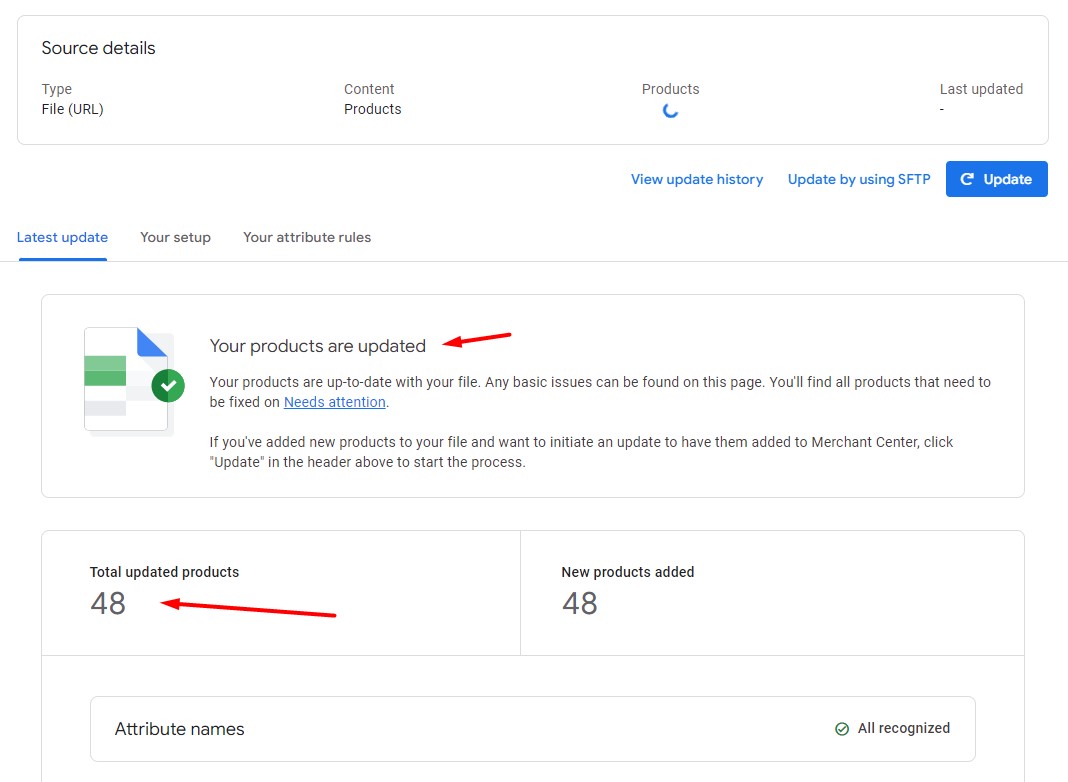
Once GMC fetches your products successfully, it will start distributing them to different platforms, as we mentioned before.
How to Connect Google Merchant Center to Google Ads
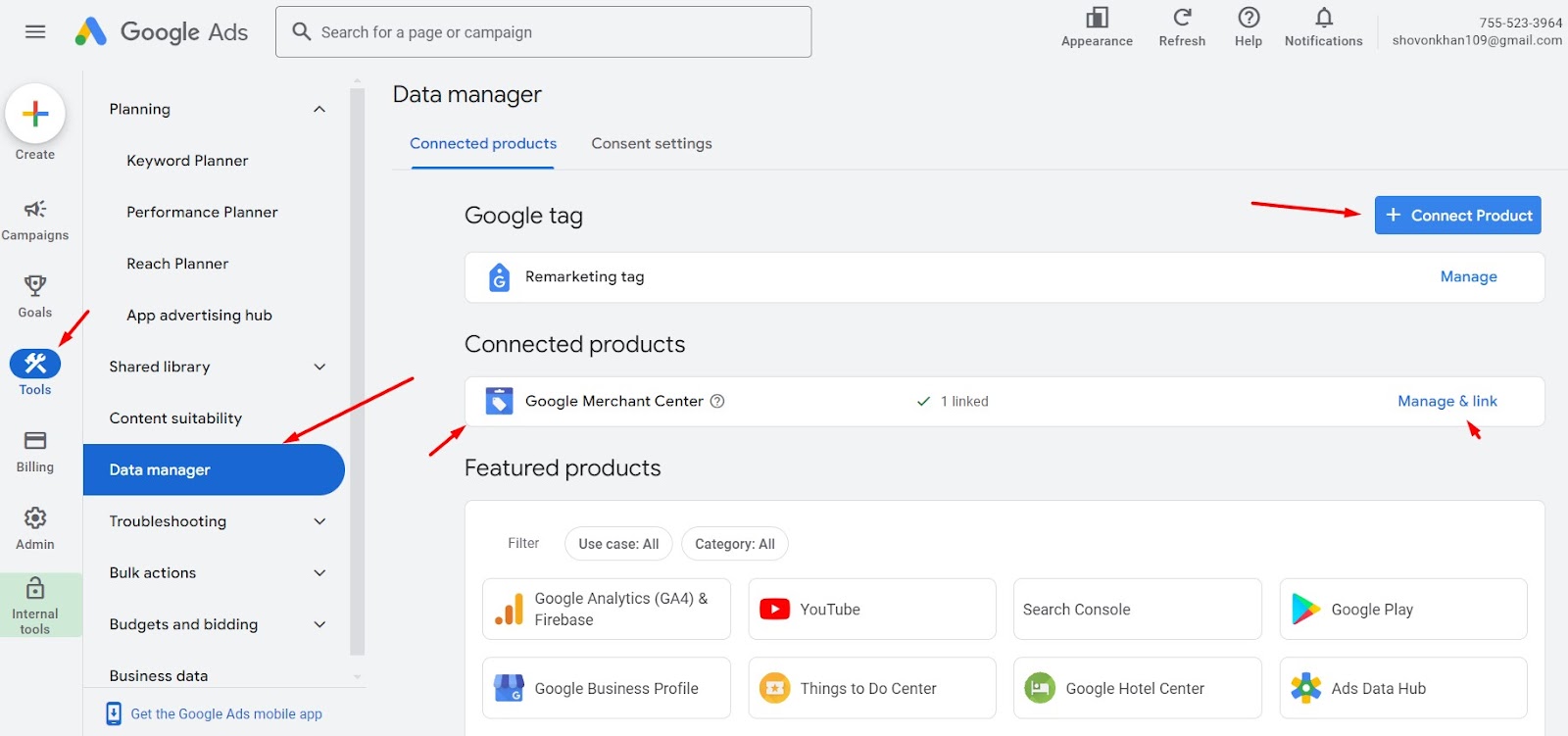
Go to your Google Ads account. Navigate to Tools > Data Manager and click Connect Product. Search for your Merchant Center account, select it, and link it to your Google Ads account. This connection allows Google Ads to pull product data from your Google Shopping ads feed when running Shopping campaigns.
The next step to creating Google Shopping ads is to connect the GMC account to the Google Ads account. Google Ads has placed this option under a new menu.
Go to Tools >> Data Manager and click on Connect Product. Search, find, select, and link your GMC account.
Creating Google Shopping Ads Campaign
Click the following to create a new campaign.
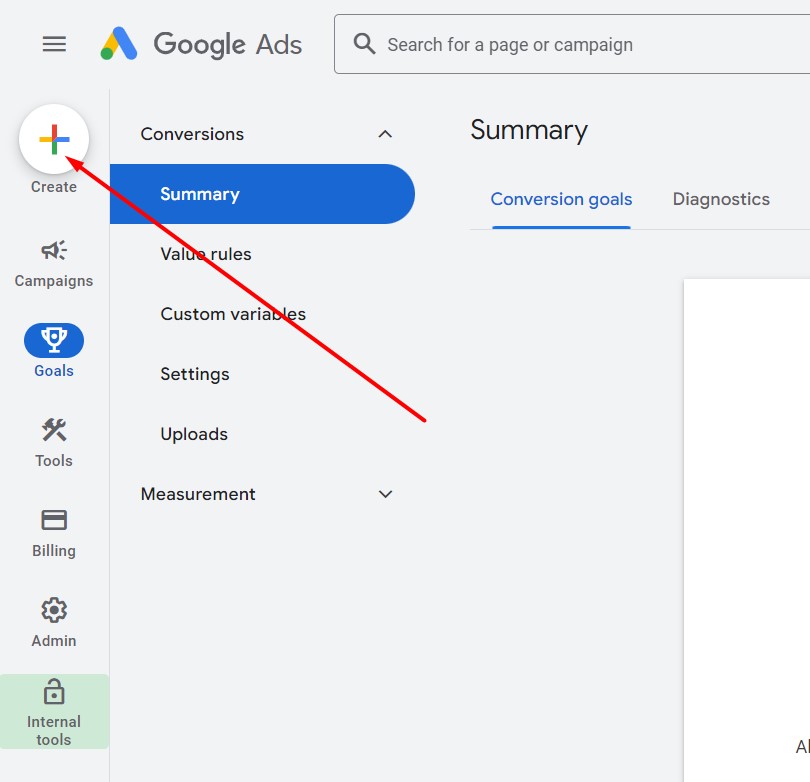
Select campaign objective Sales.
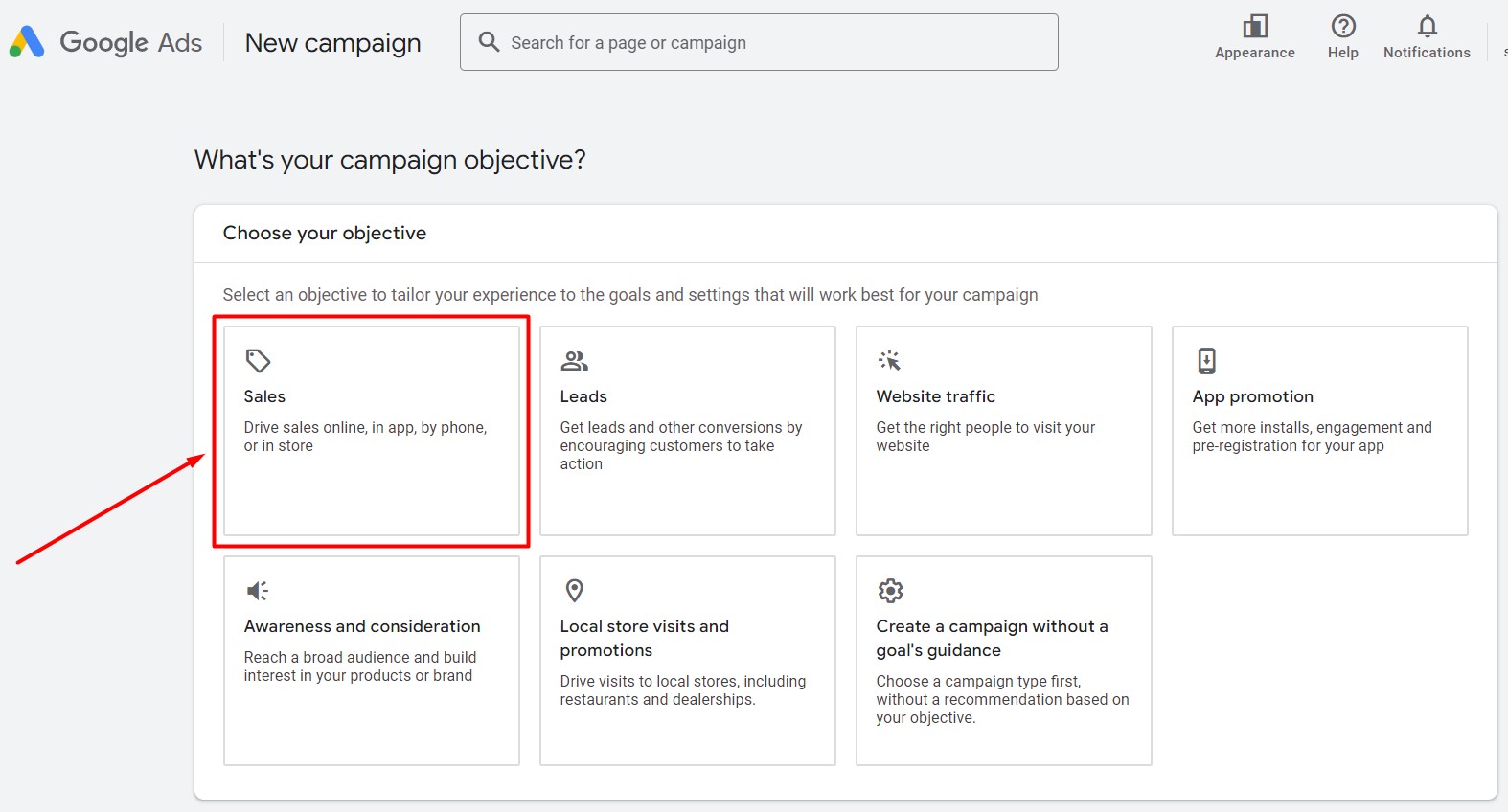
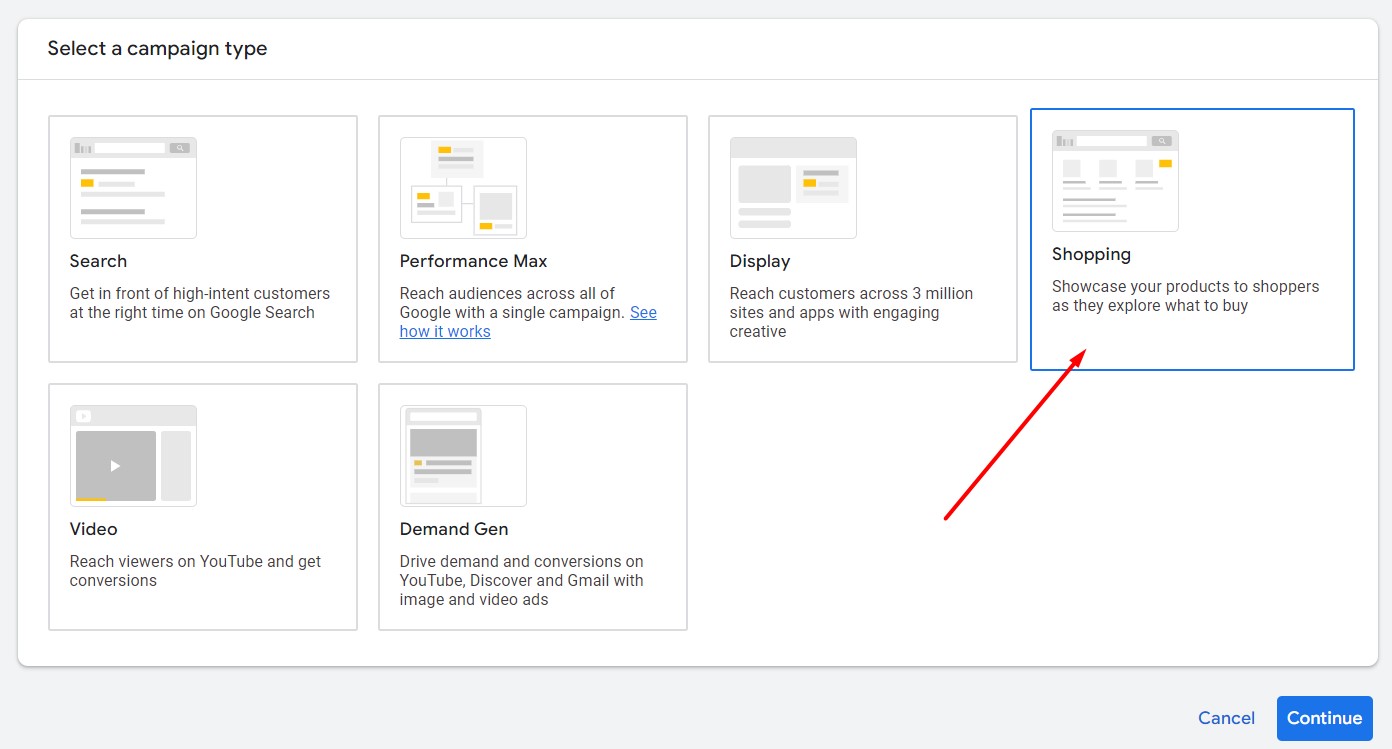
Our campaign type is Shopping.
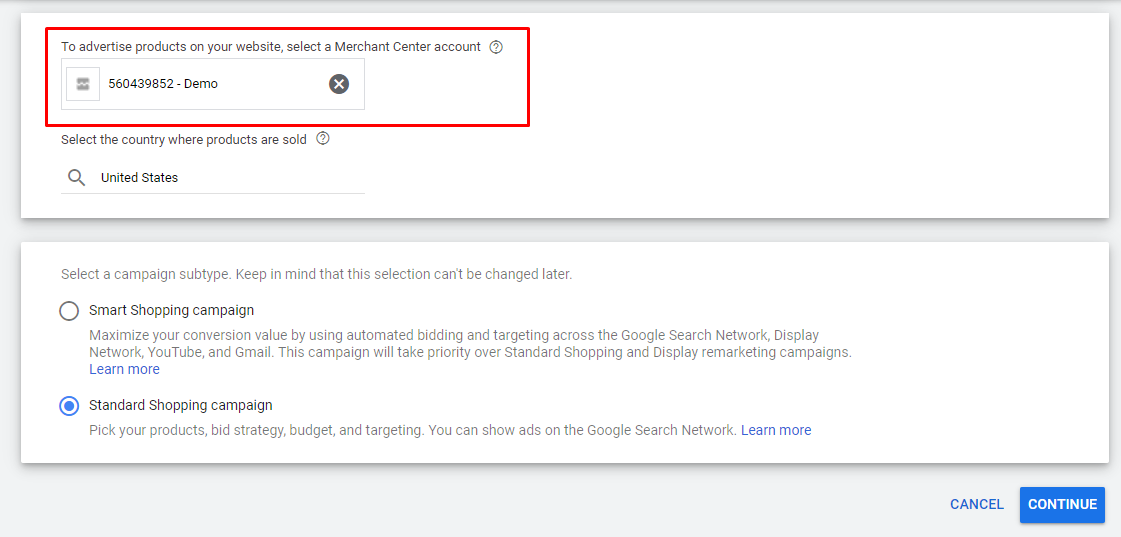
The campaign will automatically fetch the product feed linked to the GMC account you connected.
For Google to decide everything for you, select the Performance Max option.
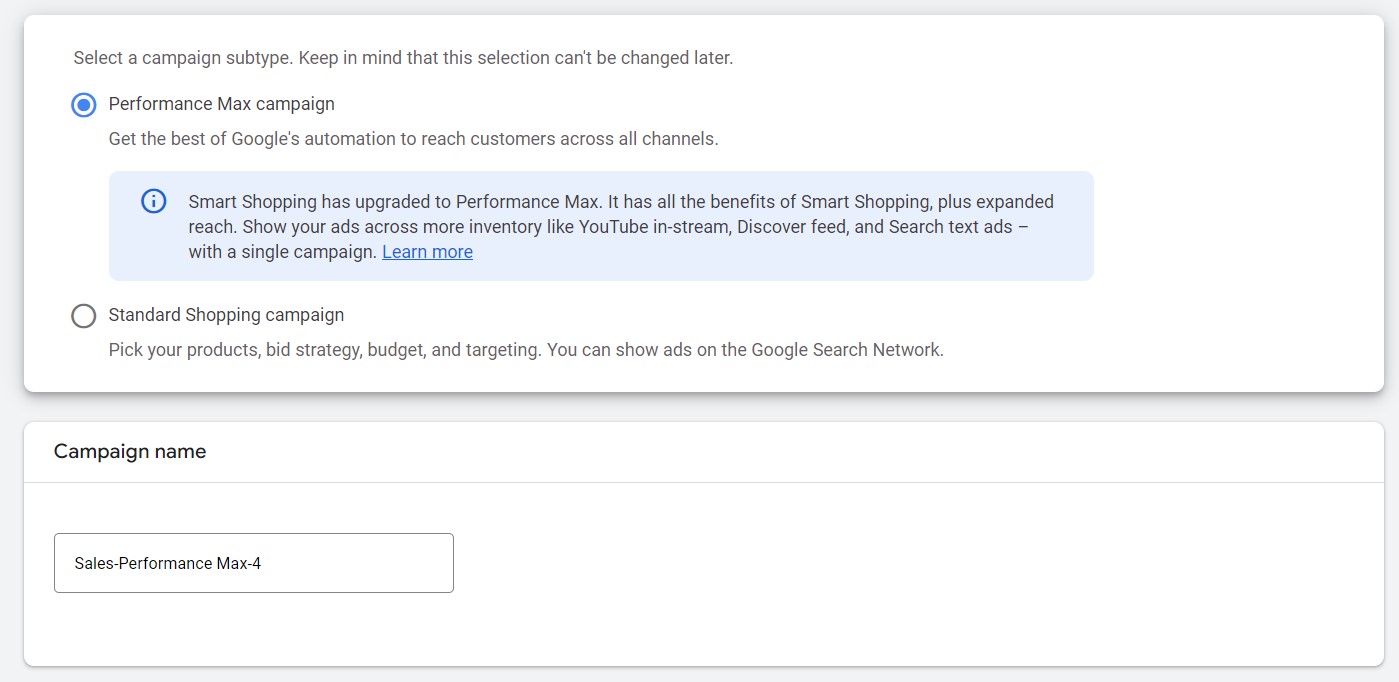
If you want to drive manual, select the standard option and set your budget, location, CPC, etc., and launch your shopping campaign.
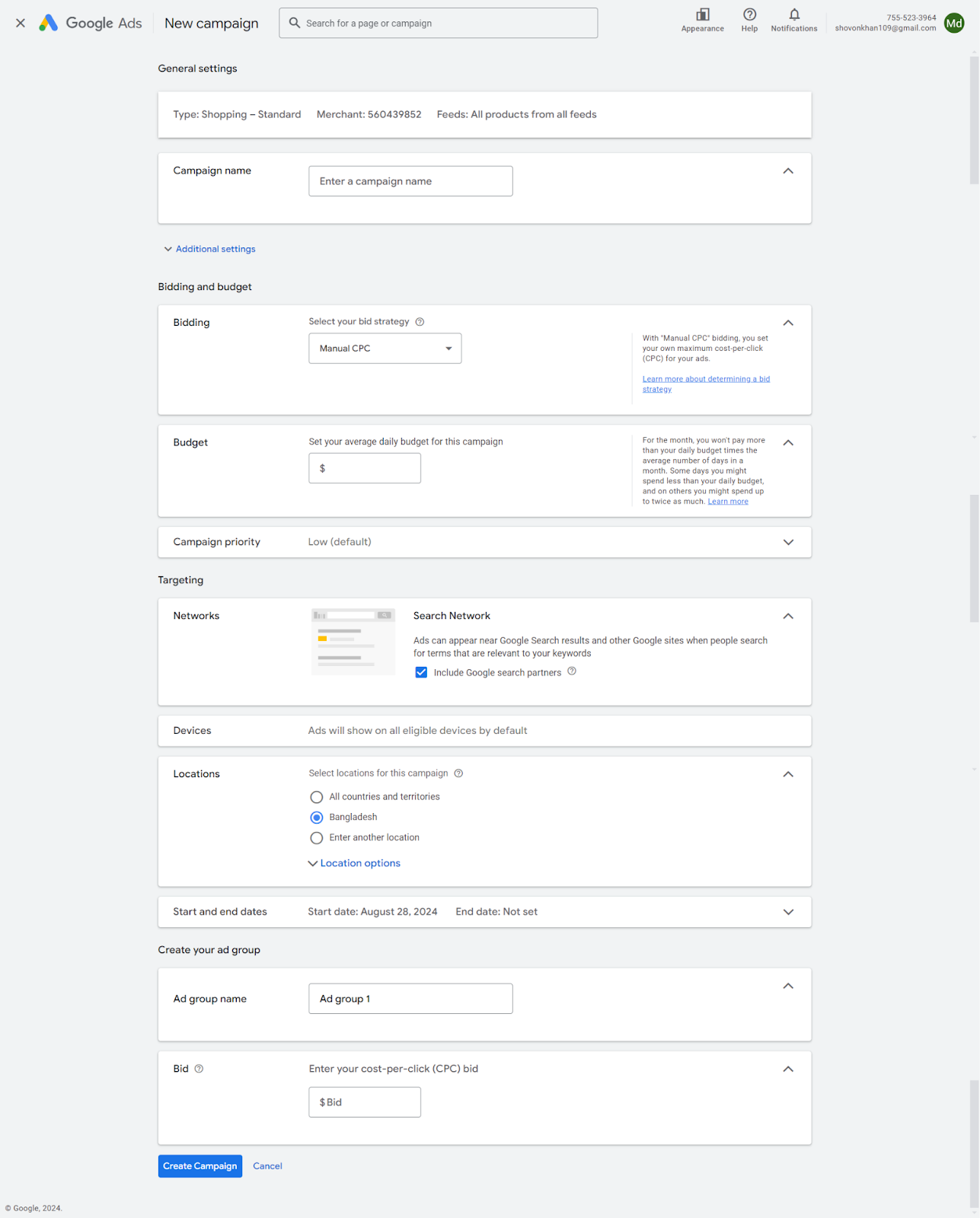
Google will now automatically generate the ads from your Google Shopping ads feed and distribute them across the web.
How to Create a Google Shopping Ads Campaign
Click the campaign creation button in Google Ads and select Sales as your objective. Choose Shopping as the campaign type. The campaign automatically pulls the product feed from the linked Merchant Center account.
For automated bidding and placement, select Performance Max. Google manages targeting, bidding, and ad placement across all its channels based on your Google Shopping ads feed data.
For manual control, choose the Standard Shopping option. Set your daily budget, target location, and cost-per-click (CPC) bids, then launch the campaign.
Google generates your product ads automatically from the feed and distributes them across Google Search, Shopping, YouTube, Gmail, and partner networks.
Google Shopping Ads Feed Format and Required Attributes
A Google Shopping ads feed can be in CSV, XML, TSV, or Google Sheets format. Google Merchant Center supports all of these. Most WooCommerce store owners use XML or CSV feeds generated by a plugin like CTX Feed.
Google supports over 50 product attributes. The required and commonly used ones include:
- id: A unique identifier for each product in your WooCommerce store.
- title: A descriptive, keyword-relevant product name (up to 150 characters).
- description: A detailed product description highlighting key features.
- link: The URL of the product page on your store.
- image_link: The URL of the main product image.
- price: The current price of the product, including currency code.
- availability: Whether the product is in stock, out of stock, or on preorder.
- brand: The manufacturer or brand name of the product.
- gtin: A globally unique product identifier such as UPC, EAN, or ISBN.
- mpn: The manufacturer part number, used when a GTIN is unavailable.
- google_product_category: The Google taxonomy category that best fits your product.
- product_type: Your own category structure for the product.
- condition: Whether the product is new, refurbished, or used.
- shipping: The shipping cost and destination details.
Google also supports optional attributes for promotions, custom labels, sale prices, item group IDs (for product variants), color, size, and material.
Types of Google Shopping ads feed
Google supports and allows you to upload several types of feeds to promote your products. It also supports more than one type of Google Shopping ads feed.
Google Shopping Primary Feed (Merchant Center Feed)
This is the core feed for Google Shopping Ads, containing all the essential product data, such as titles, prices, descriptions, and images. It’s the backbone of your Google Shopping campaigns, which ensures your products appear in shopping-free listings and ads.
Required attributes include Product ID, Title, Price, Description, and more. Creating this feed is easy with tools like the CTX Feed WooCommerce plugin, which automates the process.
Google Dynamic Remarketing Feed
The Google Dynamic Remarketing feed allows you to re-target potential customers who have previously visited your site. Google dynamically generates ads based on user behavior, displaying personalized ads that feature products they’ve shown interest in. Attributes typically include Product ID, Title, and URL, among others.
Google Local Inventory Feed
For businesses with physical stores, this feed lists products available locally, helping drive foot traffic to your store by showing nearby shoppers what’s in stock. It includes attributes like Store Code, Quantity, and Price. Google Local Inventory feed can be used for free listings or paired with paid ads to enhance visibility.
Google Promotions Feed
This feed highlights special offers or discounts in your Google Shopping Ads, making your products stand out. Attributes like Promotion ID, Start Date, and Discount Amount are used to create compelling promotions that can increase click-through rates and conversions.
Google Product Review and Ratings Feed
Google Product Ratings are a key feature in Google Shopping ads and listings that showcase aggregated customer feedback on individual products. These ratings are displayed as star ratings (from 1 to 5 stars) alongside product listings in Google Shopping ads and organic listings.
This helps potential customers make informed purchase decisions. The ratings are sourced from various platforms, including merchants, review aggregators, and Google users, and are compiled by Google’s algorithms to ensure consistency and relevance.
Google Shopping Ads Feed Best Practices
Following Google Merchant Center feed specifications closely reduces errors and improves how your products rank in Shopping results.
- Product titles: Write clear, specific titles that include the product name, brand, key attributes (such as color, size, or material), and relevant keywords. Google uses the title as a primary matching signal for your Shopping ads.
- Product descriptions: Focus on product features, materials, dimensions, and use cases. Avoid generic marketing phrases.
- Images: Use high-quality images on a clean background. Google requires a minimum image size and will disapprove listings with low-quality or watermarked images.
- GTIN and MPN: Always provide a GTIN or MPN. Products without identifiers may receive lower visibility in Shopping results, particularly in competitive categories.
- Category mapping: Assign the most specific Google product category available. Broad categories increase the chance of mismatched ad placement.
- Feed updates: Update your Google Shopping ads feed frequently to reflect current stock levels, prices, and promotions. Stale feed data leads to GMC errors, disapproved products, and wasted ad spend.
- Monitor feed errors: Check your Merchant Center account regularly for feed warnings and disapprovals. Resolve issues promptly to maintain listing and campaign health.
Best WooCommerce Plugin for Google Shopping Ads Feed: CTX Feed
CTX Feed is a WooCommerce plugin that automates the creation, formatting, and syncing of Google Shopping ads feeds and feeds for over 130 other channels.
The plugin is designed for WooCommerce store owners who need to meet Google Merchant Center feed specifications without building feeds manually. It includes a pre-configured Google Shopping ads feed template, built-in category mapping for Google’s taxonomy, automatic feed updates via URL, and custom field support for GTIN, MPN, and Brand.
Key Features
- Pre-built Google Shopping ads feed template with all required attributes
- Dedicated custom fields for GTIN, MPN, and Brand (no additional plugin needed)
- Category mapping tool with Google’s full product taxonomy built in
- Automatic feed update scheduling via live feed URL
- Advanced product filters including out-of-stock removal, category and SKU exclusions, and shipping filters
- Supports over 220 channel templates including Facebook, Pinterest, Bing, and Amazon
- Feed URL generation for direct Google Merchant Center integration
Pricing details and plan options are listed on the official CTX Feed website. A free version is available.
Frequently Asked Questions
What is a Google Shopping ads feed?
A Google Shopping ads feed is a structured product data file you upload to Google Merchant Center. It contains product attributes like titles, prices, descriptions, images, GTINs, and availability. Google uses this feed to generate Shopping ads and free product listings across Google Search, Google Images, YouTube, and other Google platforms.
What format does a Google Shopping ads feed use?
Google Merchant Center accepts Google Shopping ads feeds in XML, CSV, TSV, and Google Sheets format. XML is the most common format for WooCommerce stores using feed plugins like CTX Feed. You can also use a Google Sheets template if you prefer managing your feed manually.
What attributes are required in a Google Shopping ads feed?
The core required attributes are: id, title, description, link, image_link, price, availability, and google_product_category. For most product types, Google also requires a brand and either a GTIN or MPN. Missing required attributes result in product disapproval in the Merchant Center.
How do I update my Google Shopping ads feed automatically?
CTX Feed generates a live feed URL that you paste into Google Merchant Center. Set an update interval in CTX Feed to refresh the feed whenever your product data changes, and set a fetch schedule in GMC to retrieve the updated feed regularly. Both settings work together to keep your Google Shopping ads feed current.
Why is my Google Shopping ads feed showing errors in Merchant Center?
Common causes include missing required attributes (such as GTIN or brand), incorrect category mapping, mismatched prices between your feed and product pages, low-quality images, and unavailable product URLs. Check the Diagnostics section in Merchant Center for specific error details and resolve disapprovals before relaunching your campaign.
Where do Google Shopping ads appear?
Google Shopping ads can appear on Google Search results pages, the Google Shopping tab, Google Images, YouTube, Google Maps, Gmail, Google Lens, and millions of Google partner websites and apps. Your Google Shopping ads feed data determines which products appear, in which placements, and for which search queries.
Key Takeaways
- A Google Shopping ads feed is a structured product data file uploaded to Google Merchant Center. It drives both Shopping ads and free product listings across Google’s platforms.
- Required Google Shopping ads feed attributes include product ID, title, description, image URL, price, availability, GTIN or MPN, brand, and Google product category.
- Google Shopping ads feeds can be in XML, CSV, TSV, or Google Sheets format. XML via a live URL is the most practical format for WooCommerce stores.
- CTX Feed automates WooCommerce Google Shopping ads feed creation with a pre-built template, category mapping, custom fields for GTIN/MPN/Brand, and automatic feed updates via URL.
- Category mapping is critical. Products that do not align with Google’s taxonomy generate Merchant Center errors and may not appear in Shopping ads or listings.
- Keep your Google Shopping ads feed updated. Stale prices, out-of-stock products, or missing attributes cause disapprovals that reduce ad visibility and waste budget.
- After uploading your feed to GMC, connect Merchant Center to Google Ads and launch either a Performance Max or Standard Shopping campaign to distribute your ads across Google’s network.

Free version on WordPress.org. Every Pro licence includes a 30-day money-back guarantee.