%22%2F%3E%0A%3Cpath%20d%3D%22M59.8894%2016.6974C60.1689%2016.9331%2060.5416%2017.1216%2060.9142%2017.0745C61.5664%2017.0273%2061.8925%2016.6031%2061.6596%2015.7547C61.5198%2014.4349%2061.4267%2013.1623%2061.2869%2011.8425C61.1006%209.72149%2060.8211%207.55331%2060.5881%205.38512L60.1689%201.70863C60.0757%200.81307%2059.6099%200.294591%2058.7713%200.106053C58.4918%20-0.0353509%2058.2123%20-0.0353509%2057.9328%200.106053C57.7931%200.106053%2057.6999%200.106053%2057.6067%200.153187C56.5353%200.483129%2055.4172%200.81307%2054.3458%201.19015C53.5073%201.47295%2052.6222%201.75576%2051.7371%202.03857C50.2929%202.50991%2048.8488%203.02839%2047.4047%203.49974C46.4264%203.82967%2045.4016%204.1596%2044.3768%204.48952L44.3767%204.48956C43.6313%204.72523%2043.3518%205.24371%2043.6313%205.85646C43.7711%206.13927%2044.004%206.32781%2044.2369%206.46921C44.7028%206.79915%2045.2152%207.08196%2045.6811%207.4119C45.8674%207.55331%2046.0537%207.69471%2045.8208%208.02465C45.7276%208.21319%2045.5879%208.35459%2045.4481%208.54313L45.355%208.73167L44.5164%2010.0986L43.9108%2010.9941L43.3052%2011.8897L43.2121%2011.9839L42.1406%2013.5865L44.5867%2019.8706C45.5713%2022.1447%2048.6357%2026.5713%2052.552%2023.6277L53.9265%2022.2593L54.3458%2021.5523C54.3924%2021.458%2054.4856%2021.3637%2054.5321%2021.2694L54.5787%2021.2223C55.2309%2020.1854%2055.883%2019.1956%2056.5352%2018.2059L56.5353%2018.2057C57.0477%2017.4044%2057.5601%2016.6503%2058.0726%2015.849C58.2123%2015.6604%2058.3055%2015.6133%2058.4918%2015.7076C58.9577%2016.0375%2059.4235%2016.4146%2059.8894%2016.6974Z%22%20fill%3D%22%233D89D0%22%2F%3E%0A%3Cpath%20d%3D%22M28.0259%2022.0232C27.9793%2022.0703%2027.9793%2022.1175%2027.9327%2022.1646C27.9793%2022.1175%2028.0259%2022.0703%2028.0259%2022.0232Z%22%20fill%3D%22url(%23paint1_linear)%22%2F%3E%0A%3Cpath%20d%3D%22M53.9265%2022.3064C53.7402%2022.5892%2053.5538%2022.872%2053.3675%2023.202C53.0414%2023.7204%2052.7153%2024.1918%2052.3892%2024.7103C51.3178%2026.4071%2050.1531%2027.9625%2048.4295%2029.0938C46.9388%2030.0365%2045.4015%2030.6021%2043.6779%2030.8849C42.1872%2031.1206%2040.7896%2030.9791%2039.3921%2030.5549C37.6219%2030.0365%2036.038%2029.1409%2034.687%2027.8211C33.7088%2026.8784%2032.9634%2025.7944%2032.3578%2024.616C32.0317%2023.9561%2031.7988%2023.2491%2031.4727%2022.5421C31.0534%2021.5522%2030.1683%2019.2427%2030.1218%2019.1012C30.0752%2019.0541%2030.0752%2018.9598%2030.0286%2018.9127C29.9354%2018.7242%2029.8422%2018.5828%2029.7957%2018.3942C29.6559%2018.0172%2029.4696%2017.6401%2029.3298%2017.2159C29.2366%2017.0273%2029.1901%2016.8388%2029.0969%2016.6503C28.9571%2016.3674%2028.864%2016.0846%2028.7242%2015.7547C28.5845%2015.3776%2028.4447%2015.0005%2028.2584%2014.6235C28.1652%2014.3407%2028.0254%2014.0579%2027.9323%2013.775C27.9323%2013.7279%2027.9323%2013.7279%2027.8857%2013.6808C27.7925%2013.4922%2027.7459%2013.3037%2027.6528%2013.1152C27.4664%2012.5967%2027.2335%2012.1253%2027.0006%2011.6069C27.0006%2011.5597%2026.954%2011.5126%2026.9074%2011.4655C26.8142%2011.2769%2026.7211%2011.1355%2026.5813%2010.947C26.5347%2010.8998%2026.4882%2010.8527%2026.4882%2010.8056C26.4416%2010.7584%2026.395%2010.7113%2026.395%2010.6642C26.3484%2010.617%2026.3018%2010.5699%2026.2552%2010.5228C26.2086%2010.4756%2026.2086%2010.4285%2026.1621%2010.4285L26.1155%2010.3814C26.0689%2010.3342%2026.0223%2010.2871%2026.0223%2010.2871C25.9291%2010.1928%2025.8826%2010.1457%2025.7894%2010.0514C25.7428%2010.0043%2025.6962%209.95715%2025.6496%209.95715C25.603%209.91002%2025.5565%209.91002%2025.5099%209.86288C25.4167%209.81575%2025.3701%209.76861%2025.277%209.67435C25.2304%209.62721%2025.1838%209.62721%2025.1372%209.58008C25.0906%209.53294%2025.044%209.53294%2024.9974%209.48581C24.9509%209.48581%2024.9043%209.43867%2024.9043%209.43867C24.8577%209.39154%2024.8111%209.39154%2024.7645%209.3444C24.7179%209.3444%2024.7179%209.29727%2024.6714%209.29727C24.5782%209.25014%2024.485%209.203%2024.3918%209.15587C22.9943%208.59025%2021.1775%208.77879%2020.1992%209.10873C19.2675%209.43867%2018.2893%2010.3342%2018.2427%2010.4285C18.6619%209.72148%2019.0812%208.96733%2019.547%208.26031C20.1526%207.36475%2020.7117%206.4692%2021.3638%205.62078C22.3887%204.63095%2023.4602%203.78253%2024.6714%203.07551C27.0006%201.75575%2029.4696%201.52007%2032.0317%201.89715C33.3361%202.08569%2034.5939%202.60417%2035.7585%203.35832C36.9231%204.06534%2037.9014%204.96089%2038.7399%206.04499C39.2989%206.79914%2039.8114%207.60043%2040.1374%208.49598C40.6033%209.67435%2041.1623%2010.8056%2041.5816%2011.9839C41.7679%2012.5496%2042.0008%2013.068%2042.2338%2013.6336C42.2338%2013.6336%2042.2338%2013.6336%2042.2338%2013.6808V13.7279L45.0288%2019.8554C45.4015%2020.8452%2045.9139%2021.6465%2046.7059%2022.3535C47.2183%2022.872%2047.8705%2023.1548%2048.5227%2023.3905C48.5693%2023.3905%2048.6158%2023.4376%2048.6624%2023.4376C49.7805%2023.7676%2051.2246%2023.3905%2052.3426%2023.0134C53.088%2022.6835%2053.6936%2022.4007%2053.9265%2022.3064Z%22%20fill%3D%22url(%23paint2_linear)%22%2F%3E%0A%3Cpath%20d%3D%22M28.0255%2022.0238C27.9789%2022.0709%2027.9789%2022.118%2027.9324%2022.1652C27.9324%2022.1652%2027.9324%2022.1652%2027.9324%2022.2123C27.7926%2022.448%2027.6063%2022.6836%2027.4665%2022.9664C25.8826%2025.8416%2024.4385%2028.1512%2021.6434%2029.6595C19.3142%2030.9793%2016.8452%2031.215%2014.2831%2030.8379C14.1433%2030.8379%2014.0501%2030.7908%2013.9104%2030.7908C12.7458%2030.6022%2011.5812%2030.0838%2010.4165%2029.2825C8.78607%2028.1512%207.52829%2026.5958%206.64318%2024.8047L6.17733%2023.9091L5.01272%2021.5524L0.726927%2012.6911C0.447419%2012.0784%200.214496%2011.4656%200.121327%2010.8529C-0.437689%207.8834%200.95985%204.77252%203.80151%203.35849C5.43198%202.51007%207.24878%202.4158%208.87924%202.93428C10.6029%203.45276%2012.1402%204.67825%2013.0253%206.46937L13.1184%206.6579L14.7489%209.95732C14.7955%2010.0516%2014.7955%2010.1459%2014.8421%2010.2401C15.075%2010.8529%2015.8204%2012.4083%2016.426%2013.5867C16.4725%2013.6809%2016.5191%2013.7752%2016.5657%2013.8223C16.6123%2013.9638%2016.7055%2014.1052%2016.752%2014.1994C16.7986%2014.2937%2016.8452%2014.3408%2016.8452%2014.4351C16.8452%2014.4822%2016.8918%2014.4822%2016.8918%2014.5294C16.9384%2014.5765%2016.9384%2014.6708%2016.985%2014.7179C16.985%2014.765%2017.0316%2014.765%2017.0316%2014.8122C17.0316%2014.8593%2017.0781%2014.8593%2017.0781%2014.9064C17.0781%2014.9536%2017.1247%2015.0007%2017.1247%2015.0478C17.1247%2015.095%2017.1713%2015.095%2017.1713%2015.1421C17.3111%2015.4249%2017.4042%2015.7549%2017.544%2016.0377C17.6372%2016.2262%2017.6837%2016.4147%2017.7769%2016.6504C17.9632%2017.1689%2018.1962%2017.6402%2018.3825%2018.1587C18.5223%2018.4415%2018.6154%2018.7715%2018.7552%2019.0543C18.8018%2019.1485%2018.8484%2019.29%2018.8949%2019.3842C18.9881%2019.5728%2019.0347%2019.7613%2019.1279%2019.9498C19.3608%2020.5154%2019.5937%2021.0811%2019.9664%2021.5995C20.1993%2021.8823%2020.3857%2022.1652%2020.6652%2022.4008C22.3888%2023.9563%2024.9975%2023.862%2028.0255%2022.0238Z%22%20fill%3D%22url(%23paint3_linear)%22%2F%3E%0A%3Cpath%20d%3D%22M68.0888%2024.8694L68%207.88696H71.9963L71.8187%2018.4448L76.8806%207.88696H80.6548L81.3209%2018.3999L85.5392%207.88696H89.713L82.4754%2024.8694H78.1683L77.5466%2013.9072L72.3959%2024.8694H68.0888Z%22%20fill%3D%22%230D5293%22%2F%3E%0A%3Cpath%20d%3D%22M92.7771%2025.1385C89.2693%2025.1385%2086.7383%2022.6675%2086.7383%2019.2081C86.7383%2015.3893%2089.8021%2012.1545%2093.4431%2012.1545C96.6402%2012.1545%2098.8603%2014.4458%2098.8603%2017.7704C98.8603%2018.5342%2098.8159%2019.1182%2098.7271%2019.6124H90.4237C90.6457%2021.0501%2091.7114%2022.0385%2093.2211%2022.0385C94.1536%2022.0385%2094.9528%2021.724%2095.5301%2021.095L97.617%2023.4762C96.0185%2024.6443%2094.5976%2025.1385%2092.7771%2025.1385ZM90.6457%2017.411H95.4857C95.3081%2016.0632%2094.4644%2015.2545%2093.2211%2015.2545C92.0666%2015.2096%2091.0898%2016.0632%2090.6457%2017.411Z%22%20fill%3D%22%230D5293%22%2F%3E%0A%3Cpath%20d%3D%22M105.965%2024.9589C104.411%2024.9589%20103.167%2024.24%20102.368%2022.8473L101.924%2024.869H98.1499L101.791%207.52717L105.698%206.89819L104.322%2013.5923C105.166%2012.7836%20106.32%2012.2894%20107.519%2012.2894C110.139%2012.2894%20112.181%2014.8054%20112.181%2018.0401C112.226%2021.814%20109.428%2024.9589%20105.965%2024.9589ZM103.789%2016.3778L102.945%2020.4212C103.478%2021.185%20104.366%2021.6792%20105.388%2021.6792C107.208%2021.6792%20108.54%2020.2415%20108.54%2018.3097C108.54%2016.6474%20107.43%2015.4793%20105.92%2015.4793C105.077%2015.4793%20104.411%2015.7937%20103.789%2016.3778Z%22%20fill%3D%22%230D5293%22%2F%3E%0A%3Cpath%20d%3D%22M120.44%207.88696H125.058L127.899%2024.8694H123.725L123.193%2020.8259H117.154L114.978%2024.8694H110.582L120.44%207.88696ZM122.704%2017.5912L121.949%2011.9304L118.886%2017.5463H122.704V17.5912Z%22%20fill%3D%22%230D5293%22%2F%3E%0A%3Cpath%20d%3D%22M131.23%2012.3347H135.004L134.782%2013.5927C135.626%2012.7391%20136.736%2012.2449%20137.935%2012.2449C140.555%2012.2449%20142.597%2014.7608%20142.597%2017.9955C142.597%2021.8143%20139.8%2024.9592%20136.336%2024.9592C134.782%2024.9592%20133.539%2024.2853%20132.828%2022.9824L131.274%2030.0809H127.456L131.23%2012.3347ZM134.205%2016.3332L133.317%2020.5114C133.85%2021.2303%20134.738%2021.6796%20135.715%2021.6796C137.535%2021.6796%20138.867%2020.2419%20138.867%2018.31C138.867%2016.6477%20137.757%2015.4796%20136.247%2015.4796C135.493%2015.4796%20134.827%2015.7492%20134.205%2016.3332Z%22%20fill%3D%22%230D5293%22%2F%3E%0A%3Cpath%20d%3D%22M144.595%2012.3347H148.369L148.147%2013.5927C148.99%2012.7391%20150.101%2012.2449%20151.299%2012.2449C153.919%2012.2449%20155.962%2014.7608%20155.962%2017.9955C155.962%2021.8143%20153.164%2024.9592%20149.701%2024.9592C148.147%2024.9592%20146.904%2024.2853%20146.193%2022.9824L144.683%2030.0809H140.865L144.595%2012.3347ZM147.57%2016.3332L146.682%2020.5114C147.214%2021.2303%20148.102%2021.6796%20149.079%2021.6796C150.9%2021.6796%20152.232%2020.2419%20152.232%2018.31C152.232%2016.6477%20151.122%2015.4796%20149.612%2015.4796C148.857%2015.4796%20148.191%2015.7492%20147.57%2016.3332Z%22%20fill%3D%22%230D5293%22%2F%3E%0A%3Cpath%20d%3D%22M159.115%2024.8694H155.296L158.005%2012.3347H161.824L159.115%2024.8694ZM158.449%208.47099C158.449%207.1681%20159.559%206%20160.847%206C161.912%206%20162.8%206.85361%20162.8%207.93186C162.8%209.27967%20161.69%2010.4029%20160.358%2010.4029C159.248%2010.4029%20158.449%209.54924%20158.449%208.47099Z%22%20fill%3D%22%230D5293%22%2F%3E%0A%3Cpath%20d%3D%22M169.727%2020.6909L171.592%2023.1619C170.304%2024.4648%20168.572%2025.1387%20166.752%2025.1387C163.466%2025.1387%20161.068%2022.7126%20161.068%2019.388C161.068%2015.3446%20164.088%2012.1099%20167.862%2012.1099C170.082%2012.1099%20171.947%2013.0983%20173.013%2014.7606L170.304%2017.0069C169.727%2015.9736%20168.927%2015.4794%20167.773%2015.4794C166.13%2015.4794%20164.842%2017.0518%20164.842%2019.0286C164.842%2020.6909%20165.819%2021.6793%20167.329%2021.6793C168.261%2021.7243%20169.016%2021.4098%20169.727%2020.6909Z%22%20fill%3D%22%230D5293%22%2F%3E%0A%3Cpath%20d%3D%22M175.722%207.52717L179.629%206.89819L177.365%2017.6807L182.426%2012.3344H187L180.517%2018.6691L184.691%2024.869H180.162L177.009%2019.5676L175.899%2024.869H172.081L175.722%207.52717Z%22%20fill%3D%22%230D5293%22%2F%3E%0A%3Cdefs%3E%0A%3ClinearGradient%20id%3D%22paint0_linear%22%20x1%3D%2223.1831%22%20y1%3D%2224.7007%22%20x2%3D%2223.3049%22%20y2%3D%228.44851%22%20gradientUnits%3D%22userSpaceOnUse%22%3E%0A%3Cstop%20stop-color%3D%22%23327ACD%22%2F%3E%0A%3Cstop%20offset%3D%221%22%20stop-color%3D%22%234696D2%22%2F%3E%0A%3C%2FlinearGradient%3E%0A%3ClinearGradient%20id%3D%22paint1_linear%22%20x1%3D%2227.9436%22%20y1%3D%2222.0876%22%20x2%3D%2228.0428%22%20y2%3D%2222.0876%22%20gradientUnits%3D%22userSpaceOnUse%22%3E%0A%3Cstop%20offset%3D%220.2029%22%20stop-color%3D%22%234C51BF%22%20stop-opacity%3D%220.9%22%2F%3E%0A%3Cstop%20offset%3D%221%22%20stop-color%3D%22%235A67D8%22%20stop-opacity%3D%220.9%22%2F%3E%0A%3C%2FlinearGradient%3E%0A%3ClinearGradient%20id%3D%22paint2_linear%22%20x1%3D%2232.4583%22%20y1%3D%222.22148%22%20x2%3D%2239.8371%22%20y2%3D%2230.0298%22%20gradientUnits%3D%22userSpaceOnUse%22%3E%0A%3Cstop%20offset%3D%220.3367%22%20stop-color%3D%22%2342B9FF%22%2F%3E%0A%3Cstop%20offset%3D%220.7818%22%20stop-color%3D%22%233B97E1%22%2F%3E%0A%3Cstop%20offset%3D%221%22%20stop-color%3D%22%233784D1%22%2F%3E%0A%3C%2FlinearGradient%3E%0A%3ClinearGradient%20id%3D%22paint3_linear%22%20x1%3D%2211.252%22%20y1%3D%220.972585%22%20x2%3D%2215.8771%22%20y2%3D%2225.7529%22%20gradientUnits%3D%22userSpaceOnUse%22%3E%0A%3Cstop%20offset%3D%220.3367%22%20stop-color%3D%22%2342B9FF%22%2F%3E%0A%3Cstop%20offset%3D%220.7818%22%20stop-color%3D%22%233B97E1%22%2F%3E%0A%3Cstop%20offset%3D%221%22%20stop-color%3D%22%233784D1%22%2F%3E%0A%3C%2FlinearGradient%3E%0A%3C%2Fdefs%3E%0A%3C%2Fsvg%3E%0A)

Google Shopping Product Title Optimization: The Ultimate Guide
 Shayak Hossain
 To optimize Google Shopping product titles, you must front-load your most important keywords—Brand, Product Type, and Key Attributes—within the first 70 characters. While Google allows up to 150 characters, 80% of your click-through rate (CTR) depends on what users see before the title gets truncated.
A high-converting Google Shopping title isn’t just a label; it is the primary data point Google uses to match your products with user search intent. By aligning your title structure with specific industry formulas (such as Brand + Gender + Product Type + Color), you can significantly lower your Cost-Per-Click (CPC) and improve your ad rank in the Merchant Center.
In this guide, you will learn the exact frameworks to:
- Structure titles for maximum visibility across different industries.
- Avoid common pitfalls like promotional text and excessive capitalization.
- Automate optimization specifically for WooCommerce stores to save hours of manual editing.
Best Practices for Google Shopping Title Optimization
Google Shopping title optimization is critical for visibility, as the title is one of the primary ways Google’s search algorithm matches products to user queries. Optimized titles can double impressions and significantly increase click-through rates (CTR) without requiring higher bids.
Use Relevant Keywords
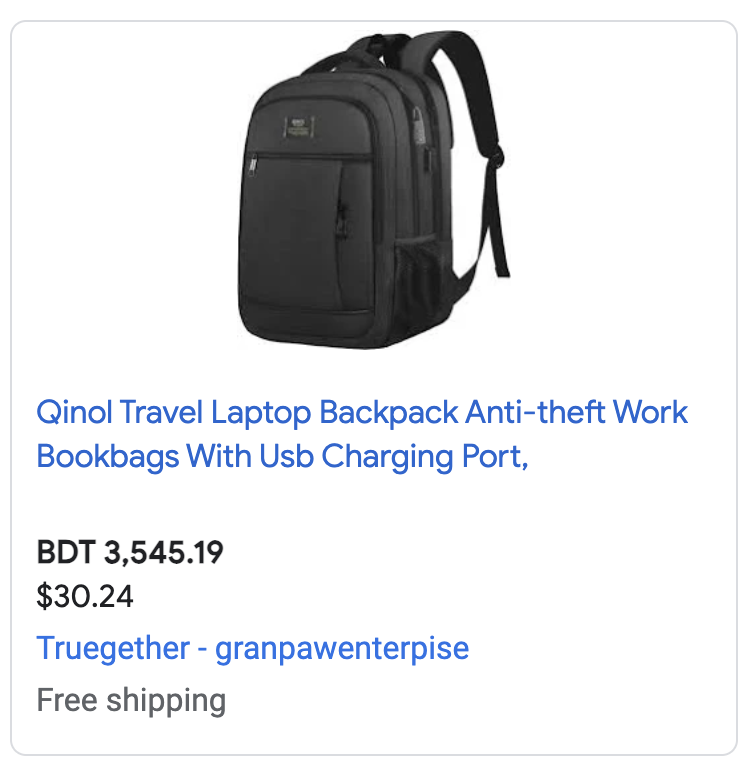
Front-load descriptive keywords that match customer search queries. Conduct keyword research to identify high-volume terms (e.g., “Travel Laptop Backpack”) and place them at the beginning of the title to improve relevancy.
- Vague: “Canvas Bag”
- Optimized: “15-inch Laptop Tote Bag for Office and Travel”
- Implementation: Use Google Search Console to find high-impression queries and move those exact terms into your title.
2. Follow Google’s Strict Requirements
Adherence to Merchant Center policies is mandatory to avoid product disapproval:
- No Promotional Text: Avoid “sale,” “free shipping,” or “limited time.”
- Professionalism: Use proper spelling and grammar.
- Capitalization: Do not use block capitals (ALL CAPS) or excessive punctuation.
- Length: Maximum 150 characters.
- Prohibited: “SALE!!! $10 OFF Nike Air Max Best Price” (Contains caps, punctuation, and promotional text).
- Compliant: “Nike Air Max Running Shoes – Black/White”
- Implementation: Keep it professional; if it looks like an ad from 1998, Google will likely disapprove of it.

3. Keep Titles Specific and Descriptive
Use clear language to define the product’s major characteristics. This reduces confusion and improves CTR. Ensure the first 70 characters contain the most vital information to prevent loss of context via truncation.
- Vague: “Hiking shoes”
- Optimized: “Men’s Waterproof Hiking Boots Gore-Tex”
- Implementation: Consider the “hidden” qualities that justify the price, such as weatherproofing or specific technology.
4. Match User Intent
Align the title with the specific benefits the user is seeking. For performance products, include durability or usage intent (e.g., “Durable Marathon Running Shoes for Training”).
- Generic: “Face Wash”
- Optimized: “Hydrating Face Wash for Sensitive Skin”
- Implementation: If your target audience is looking for a solution (e.g., “dry skin”), the solution should be in the title.
5. Key Product Details (Size, Color, Material)
- Incomplete: “Crew Neck T-Shirt”
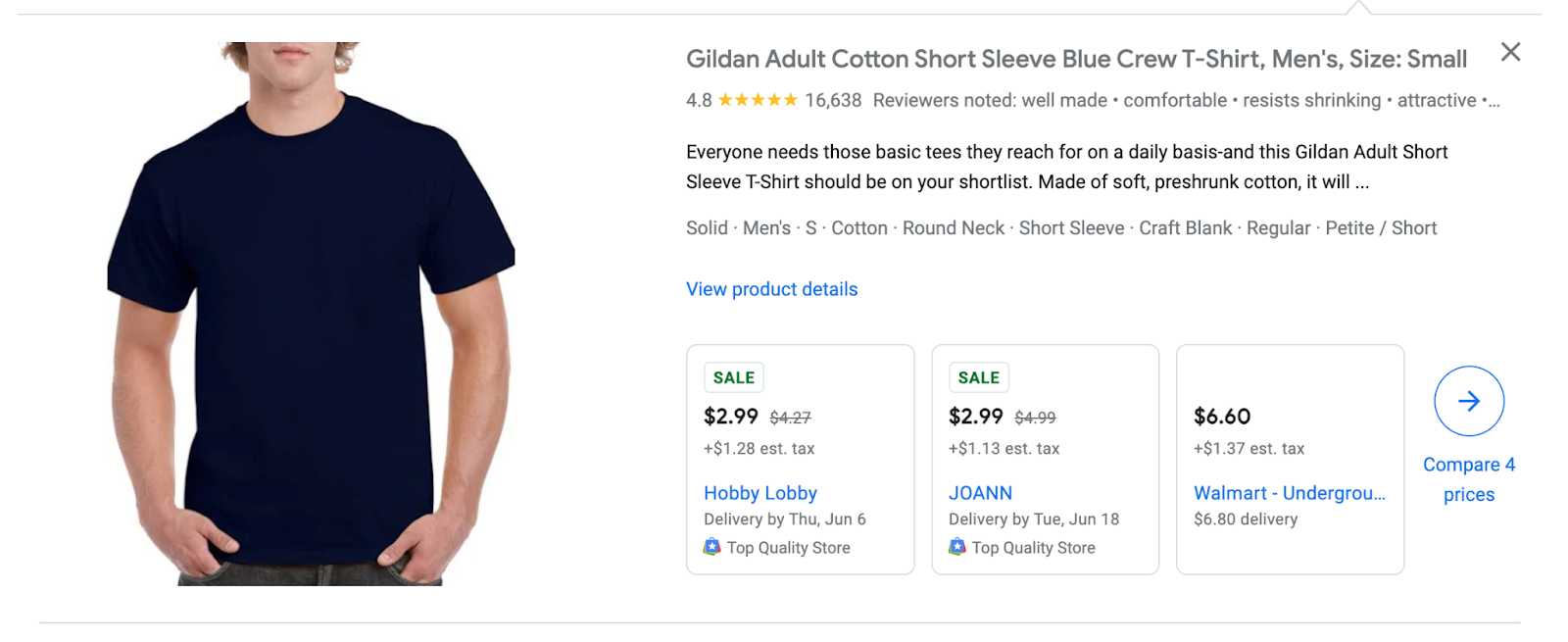
- Optimized: “Men’s 100% Organic Cotton Crew Neck T-Shirt – Navy Blue – Size Large”
- Implementation: List the attributes that would appear in a “Filter” sidebar on an e-commerce site.
6. Prioritize Information Hierarchy
Place the most influential details—Brand, Product Type, and Model—at the very beginning. Customers skim search results quickly; front-loading ensures the “hook” is seen immediately.
- Back-loaded: “High-performance lightweight aluminum Specialized Road Bike”
- Front-loaded: “Specialized Road Bike – Lightweight Aluminum – Matte Black”
- Implementation: Put the “What it is” and “Who made it” in the first 3 words.
Bonus Tip:
Regularly assess your titles’ performance using tools like Google Analytics. Adjust them as needed to improve results, focusing on metrics such as click-through rate and conversion rate.
7. Leverage Branding
Prominently feature your brand name at the start of the title to build trust and recognition. If the product has a unique selling proposition (e.g., “Eco-friendly”), include that messaging clearly.
- Unbranded: “Wireless Noise Cancelling Headphones”
- Branded: “Sony WH-1000XM5 Wireless Noise Cancelling Headphones”
- Implementation: Always lead with the brand if it has any market recognition.
8. Utilize the 150-Character Limit
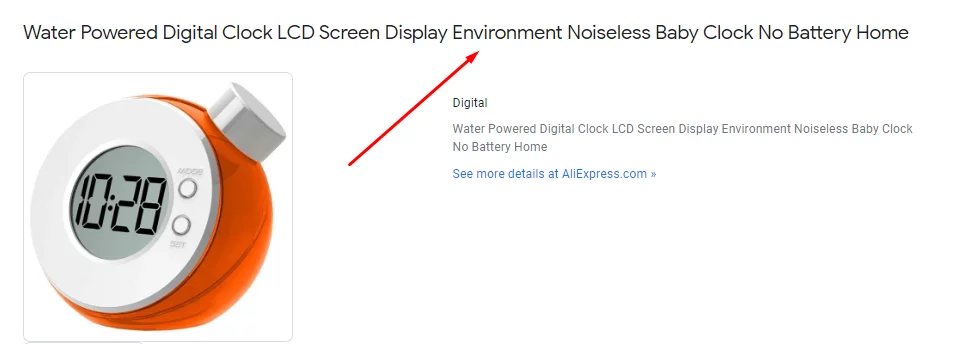
While the first 70 characters are for users, the remaining 80 characters are for Google’s algorithm. Use the full limit to include secondary details (model numbers, flavor, or variants) to capture long-tail search traffic.
- Short (User-focused): “Apple iPhone 15 Pro – Blue Titanium – 128GB”
- Full (Algorithm-focused): “Apple iPhone 15 Pro – Blue Titanium – 128GB – Unlocked – 6.1-inch Display – A17 Pro Chip – Model A2848”
- Implementation: The extra 80 characters act like “tags” that help your product show up for very specific searches.
Bonus Tip:
You can use all 150 characters, but don’t use any kind of unnecessary information at all. Also, remember to include the important things first.
9. Maintain Proper Keyword Structure
Follow a logical flow to prevent “keyword stuffing” and improve readability:
Brand Name > Product Name > Variant/Color > Size/Quantity
- Disorganized: “Size 10 Blue Leather Men’s Oxford Shoes by Clark’s”
- Structured: “Clarks (Brand) Oxford Shoes (Product) – Blue Leather (Color/Material) – Men’s Size 10 (Gender/Size)”
- Implementation: Follow the formula consistently across your entire catalog to make your feed look professional.
10. Implement Localization
Tailor titles to specific regions and languages. Use local terminology and regional spelling (e.g., “Color” vs. “Colour”) to match local search habits and improve conversion in different nations.
- US Market: “Aluminum Gray Flashlight – Size Small”
- UK Market: “Aluminium Grey Torch – Small”
- Implementation: Change your feed based on the target country to match local vocabulary.
You can also use the Google Merchant Center to create and maintain distinct feeds for different nations or regions. It will allow you to tailor your product titles and other product information to each area.
11. A/B Test Your Titles
Regularly test different title variations to determine which structure yields the highest CTR and conversion rate. Allow sufficient time for data collection before finalizing a winner.
- Test A: Brand + Product + Attribute (Sony Headphones – Black)
- Test B: Product + Attribute + Brand (Wireless Headphones – Noise Cancelling – Sony)
- Implementation: Run Test A for two weeks, then Test B. Keep the one with the higher CTR in your Merchant Center.
Recommended Google Shopping Product Title Optimization (2026)
The ideal title structure depends on what you are selling. Standardizing these formats helps Google understand your product’s context.
| Industry | Recommended Structure | Key Tip for 2026 |
|---|---|---|
| Apparel | Brand + Gender + Product Type + Key Attributes (Color, Size, Material) | Place Brand and Gender early. Adjust order depending on search intent (brand-led vs generic queries). |
| Electronics | Brand + Product Name + Model Number + Key Specs (Storage, Size, Color) | Keep Model Number and core specs early (first ~70 chars) for visibility and matching accuracy. |
| Home & Garden | Brand + Product Type + Material/Style + Dimensions/Capacity | Always include Dimensions or Capacity (e.g., “6-Seater”, “200L”) to capture high-intent searches. |
| Beauty & Personal Care | Brand + Product Type + Key Benefit/Ingredient + Size/Volume | Include active ingredients or benefits (e.g., “Vitamin C”, “Hydrating”) to match problem-based searches. |
| Sporting Goods | Brand or Activity + Product Type + Key Attributes (Color, Size, Age/Gender) | Use Activity early when intent-driven (e.g., Running, Yoga); otherwise prioritize Brand for known products. |
Implementation Checklist (Updated for 2026)
- Front-Load Key Info: Put the most important details (Product Type, Brand, Model, Core Attribute) within the first 60–80 characters for visibility.
- Use Full Title Space (Up to 150 chars): Optimize the entire title for relevance—Google reads beyond what’s shown.
- No Promotional Text: Avoid “Free Shipping,” “Sale,” “Best Price”—these violate Google Merchant Center policies.
- Keep It Natural (Avoid Over-Formatting): Use separators like – or , sparingly. Prioritize readability over symbols like | or /.
- Unique Titles for Variants: Each SKU (size, color, etc.) must have a distinct title to prevent duplication issues.
- Reinforce Key Attributes: Align titles with feed attributes (Brand, Color, Size, Material) to improve AI-based matching.
- Avoid Keyword Stuffing: Write clean, natural titles—Google increasingly rewrites or ignores spammy formatting.
Industry-Specific Google Shopping Title Examples
Use these real-world examples to guide how you implement the formulas listed in the table above.
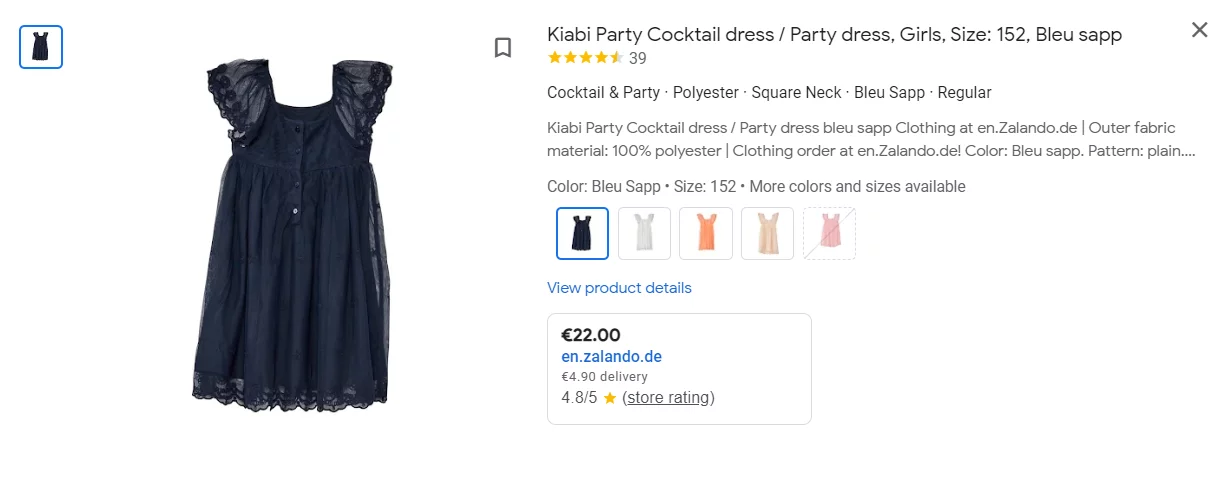
Apparel and Accessories
Include size, color, gender, and material in the product title.
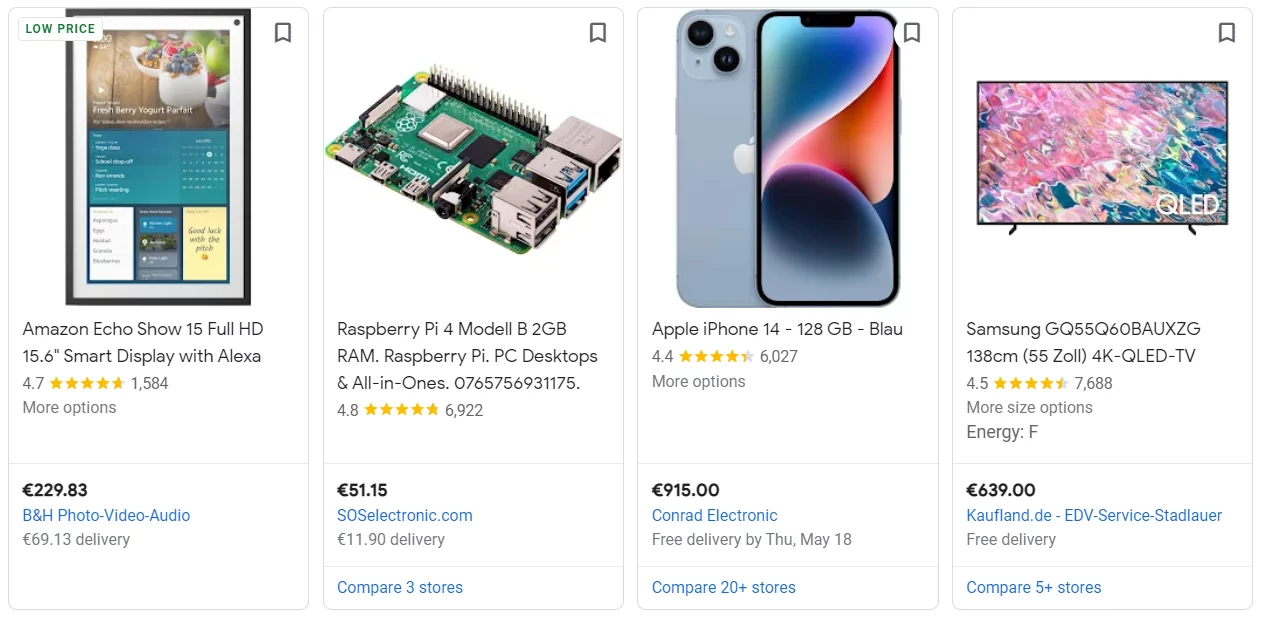
Electronics
Include brand, model, and product type in the title.
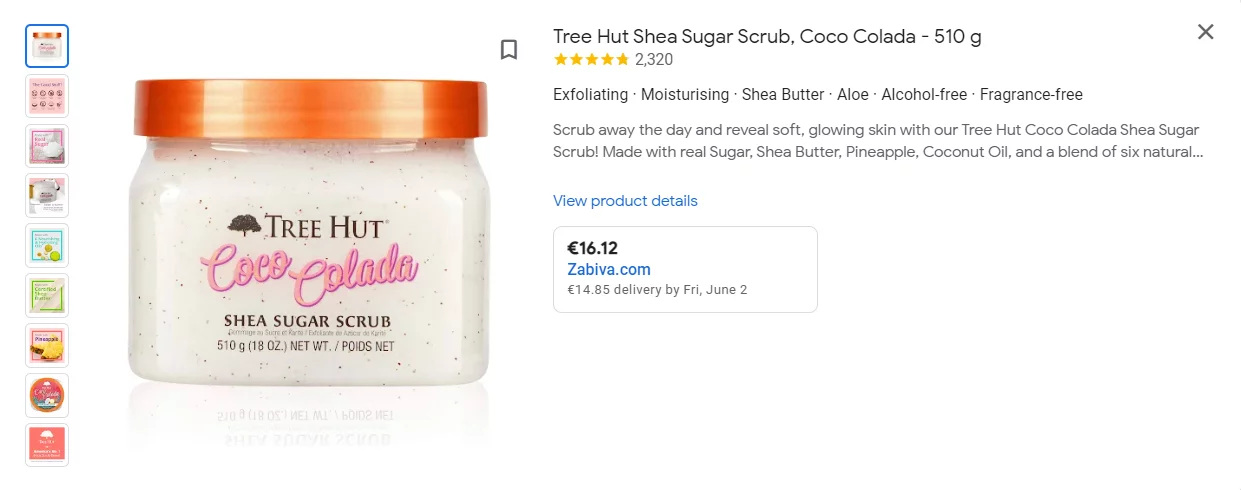
Beauty Products
Mention the size, color, and type of the product.
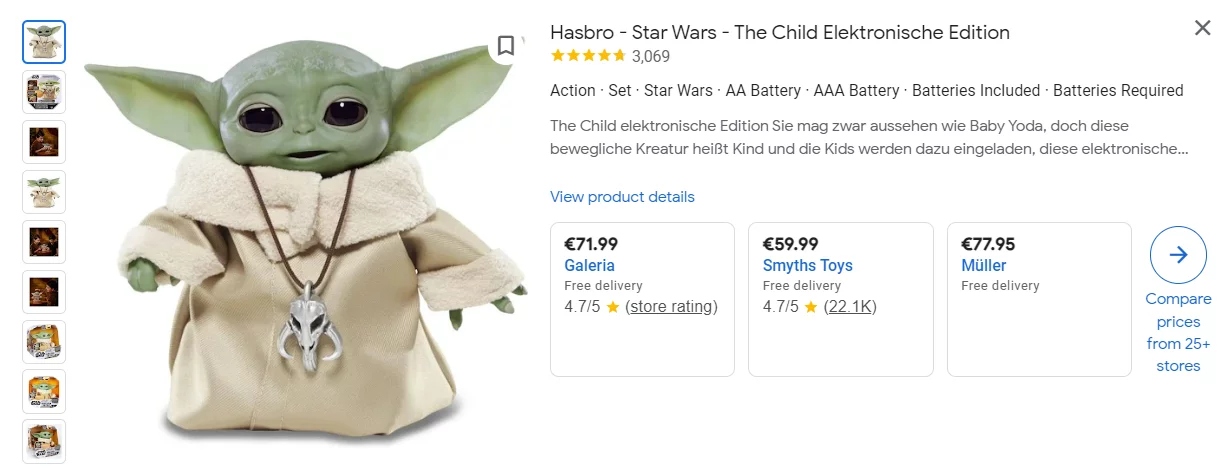
Toys and Games
Include the brand, product name, and age range in the title.
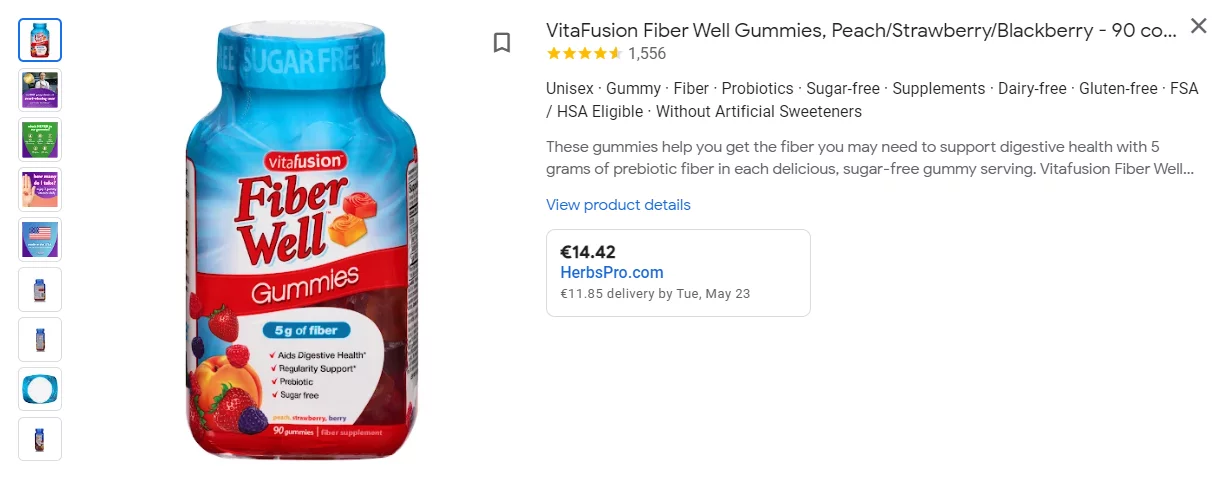
Health and Wellness
Include the brand, and product name, and type in the title.
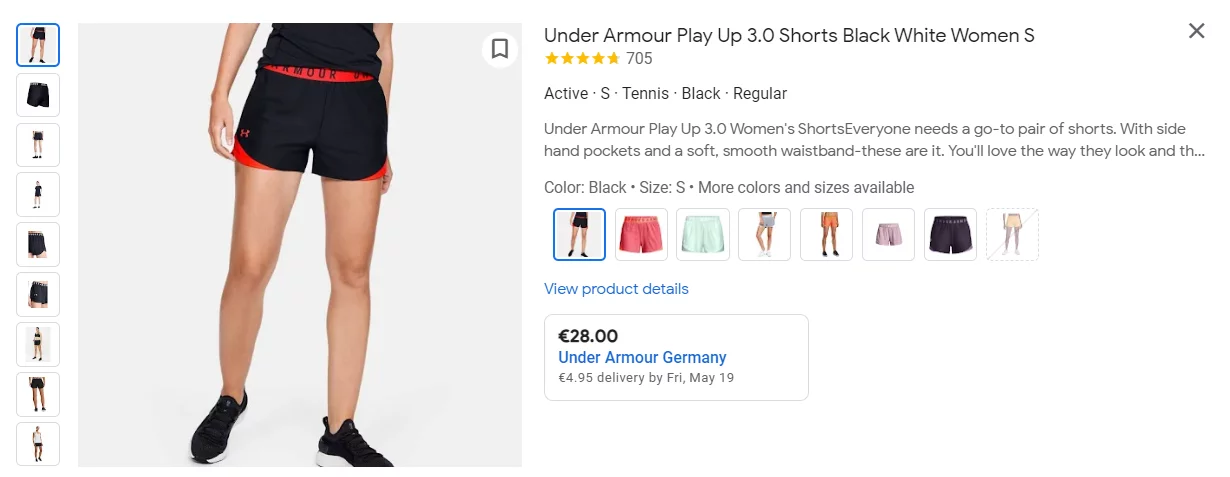
Sporting Goods
Include the brand, product name, and size in the title.
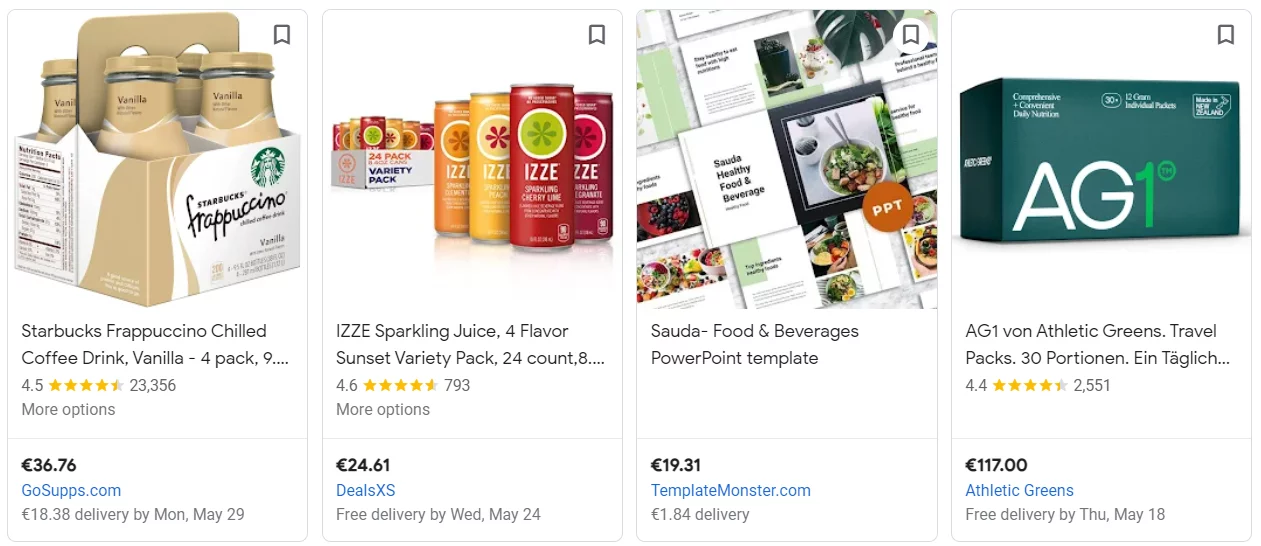
Food and Beverages
Include the brand, flavor, quantity, and type in the title.
Why Optimize Your Product Titles? 5 Strategic Benefits
Google Shopping doesn’t use traditional keyword bidding to determine where your ads appear; instead, it relies on your product feed data. The title is the most influential piece of data in that feed. If your title isn’t optimized, your product simply won’t show up for the right searches.
Here are the five real-world benefits of a data-driven title strategy:
1. Increased Ad Visibility (Reach)
Google’s algorithm uses the product title to determine relevancy. By including high-volume search terms (like “waterproof” or “organic”), you increase the chances of your ad triggering for a wider variety of search queries.
- Real Value: Better titles lead to a higher Quality Score, which often lowers your Cost-Per-Click (CPC) while keeping you at the top of the page.
2. Boosted Click-Through Rate (CTR)
The title is the first thing a shopper reads. An optimized title that mirrors the user’s search intent creates an immediate psychological “match.”
- Example: If a user searches for “Size 12 leather boots,” and your title starts with “Size 12 Leather Boots,” they are far more likely to click yours over a generic title like “Brown Men’s Footwear.”
3. Higher Conversion Rates
Title optimization isn’t just about getting the click—it’s about getting the right click. By including specific details like size, color, or compatibility in the title, you pre-qualify your traffic.
- Real Value: Shoppers who click on a descriptive title already know the product meets their needs, meaning they are much closer to a purchase by the time they land on your site.
4. Enhanced Customer Experience
Clear titles eliminate guesswork. When a title includes essential specs (e.g., “110v” vs. “220v” or “Pack of 3”), you reduce the risk of “bounce” clicks where a user leaves immediately because the product wasn’t what they expected.
- Real Value: This builds brand trust and reduces customer frustration, leading to fewer accidental clicks that waste your ad budget.
5. Sustained Competitive Advantage
Most retailers use the default product names from their website (e.g., “Classic Tee – Blue”). By manually optimizing your titles with attributes your competitors are ignoring, you capture the “Long Tail” traffic they miss.
- Real Value: You can dominate niche search terms that are less competitive but highly profitable, giving you a “moat” around your most important product categories.
How to Optimize Google Shopping Titles for WooCommerce
With over 5 million active installs, WooCommerce is a powerhouse for e-commerce, but manual title updates can be overwhelming. To automate and optimize your feed effectively, we recommend using a product feed manager plugin like CTX Feed Pro.
This plugin allows you to dynamically inject attributes—like brand, category, and size—directly into your titles. It also features advanced filtering to exclude out-of-stock or low-margin products, ensuring you only spend ad budget on your best items.
3 Steps to Optimize Titles with CTX Feed Pro:
Step 1: Install and Activate CTX Feed Pro
The first step to extend and optimize your Google Shopping product title is to install and activate the CTX Feed Pro version on your WordPress website.
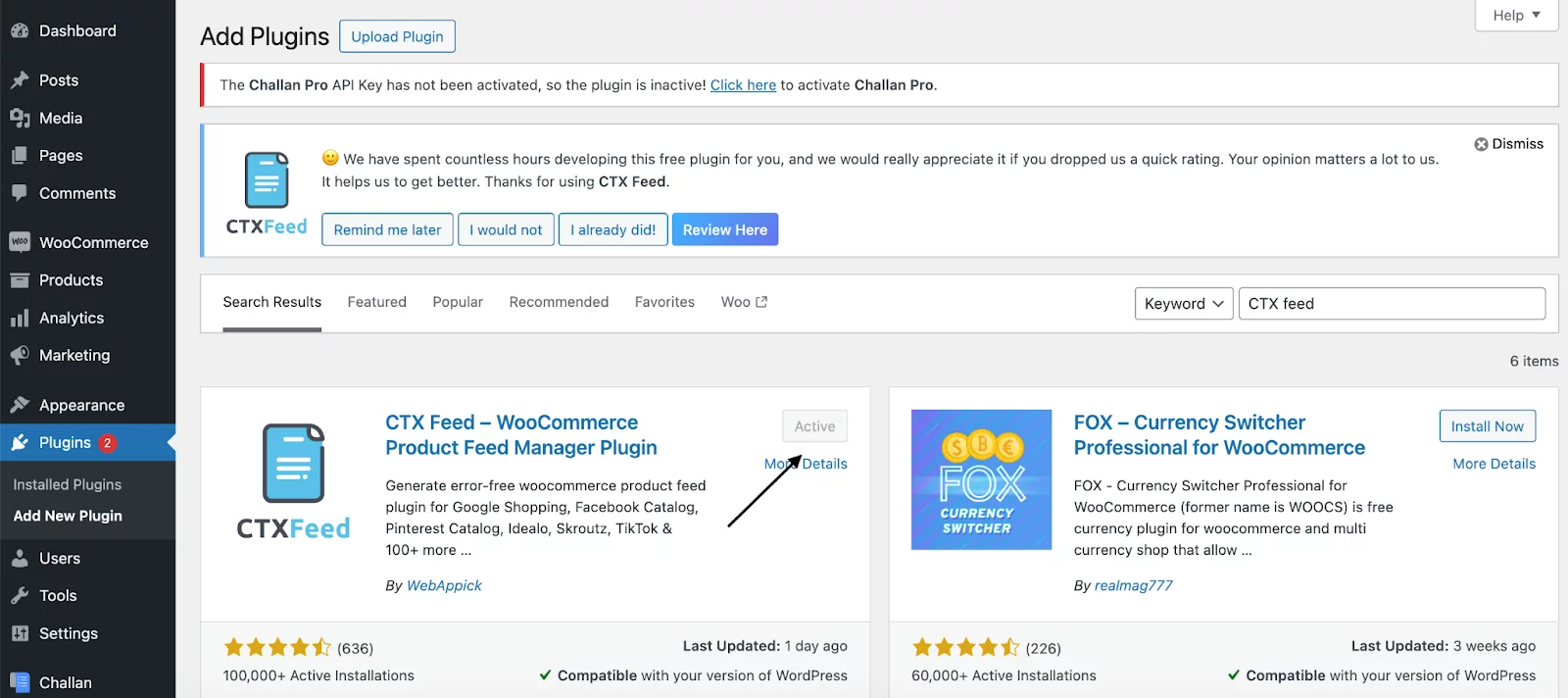
Now, to do that, simply visit your WordPress dashboard and go to “Plugins> Add New Plugin”.
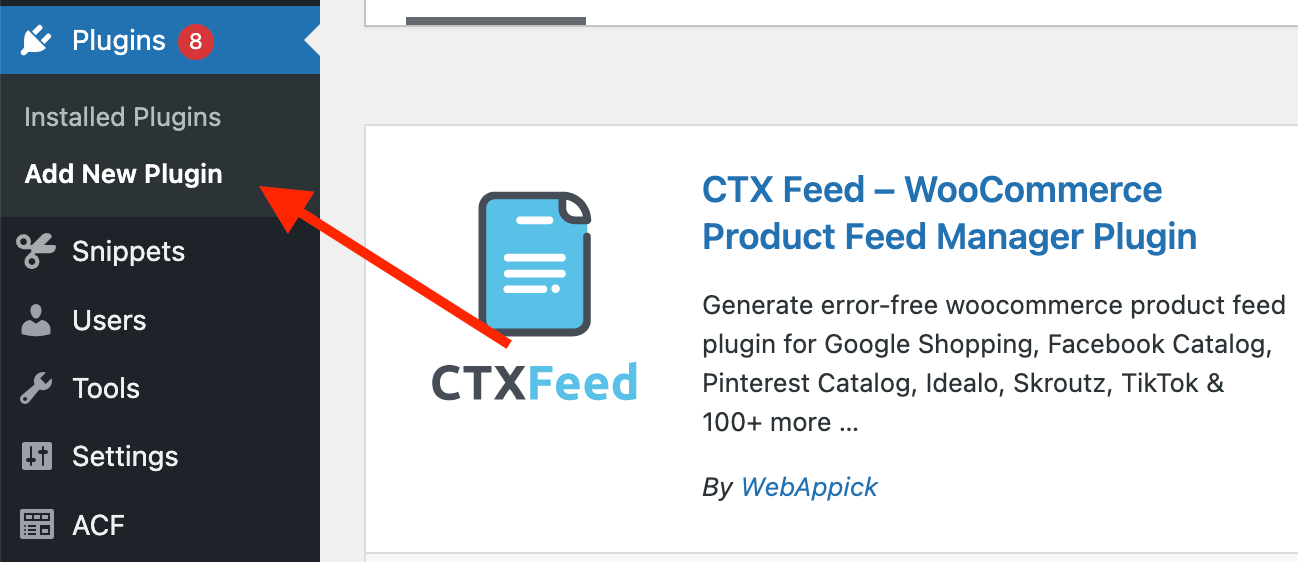
Then search for “CTX Feed” and activate the plugin.
Note:
Follow the guide to help you install and activate the latest version of CTX Feed Pro.
Step 2: Configure the Attribute Mapping
Now that you’ve installed the CTX Feed Pro, go to “CTX Feed > Attributes Mapping” and then click on the “+ Add New Attribute Mapping” button.
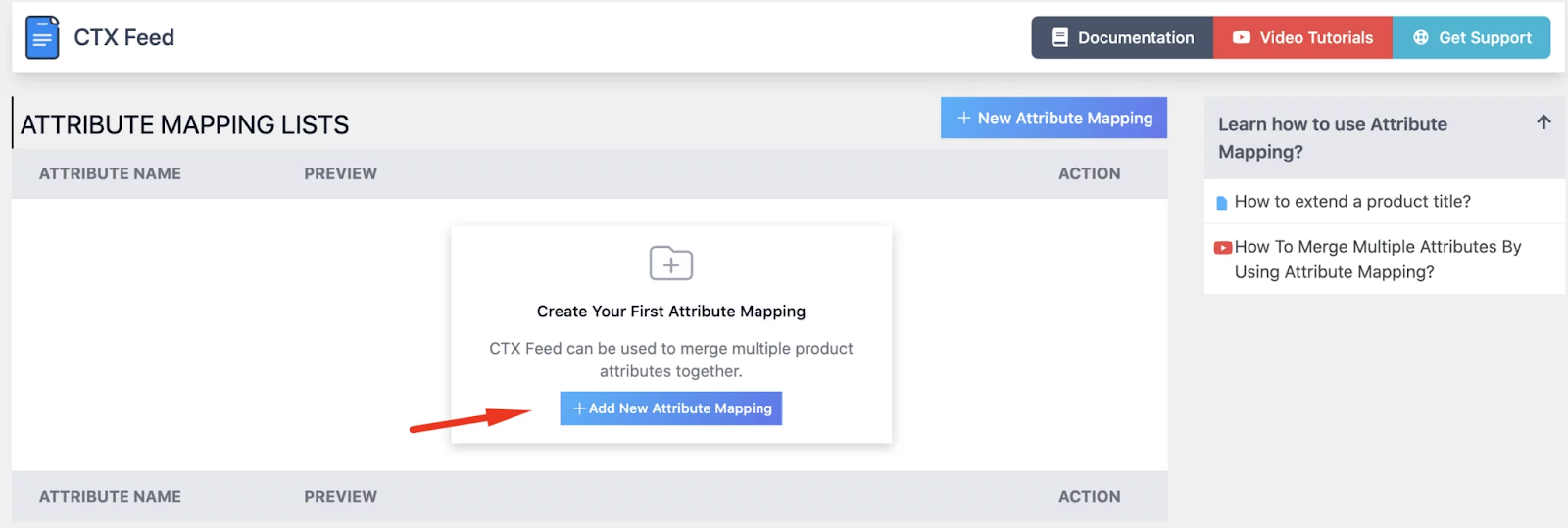
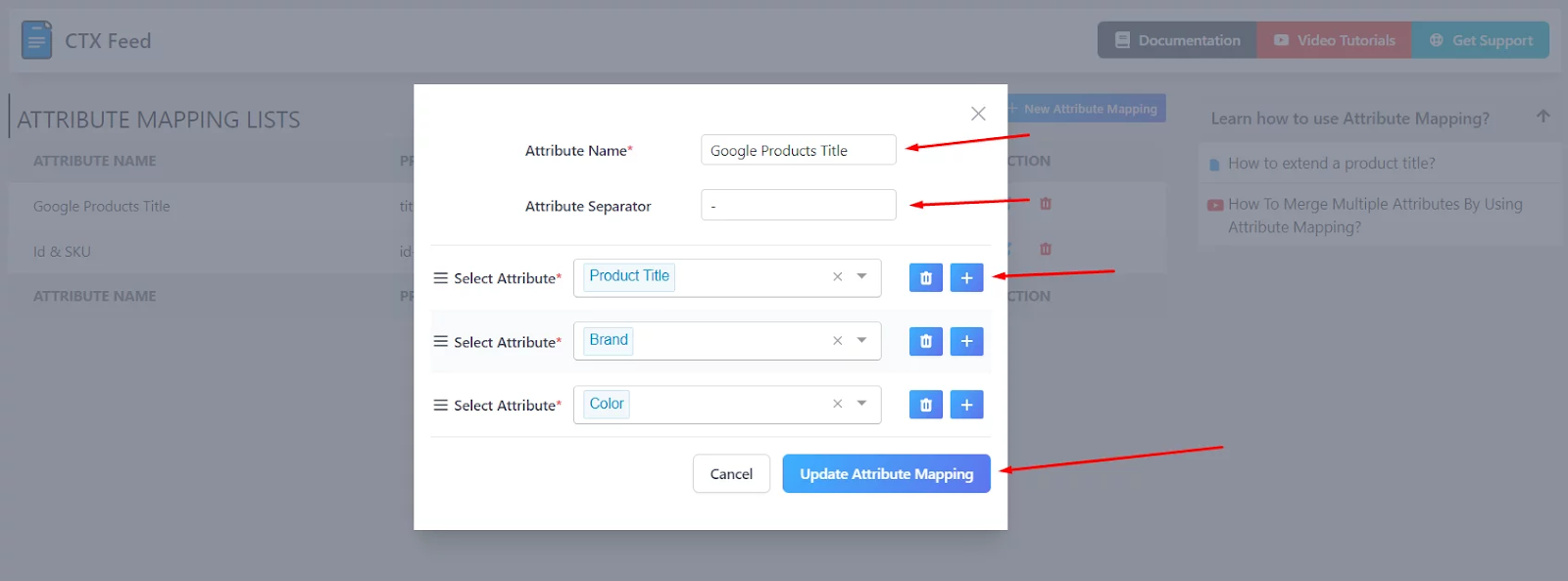
Now assign an attribute name and attribute separator. You can use “-” as a separator, as that’s widely used in the title.
Next, select the attribute(s) you want to include in your title to extend that. You can add attributes like category, brand, color, etc., to make your title more catchy on the Google Shopping platform.
Once you’re done adding the attributes from the drop-down, Click on the “Update Attribute Mapping” button.
Step 3: Make a Product Feed with Extended Titles
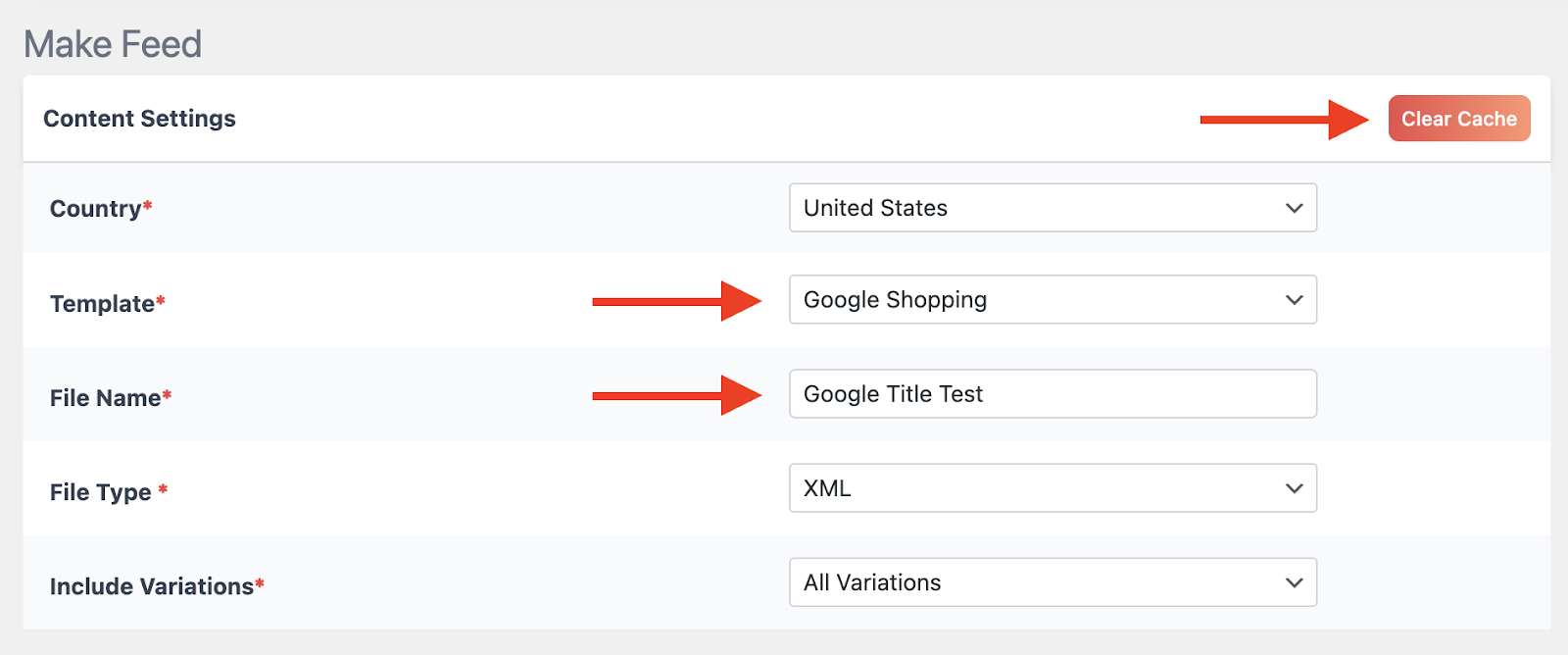
Go to CTX Feed > Make Feed. Before you start making the feed, you have to clear the cache by clicking on the “Clear Cache” button.
Now, Set the country, Choose the relevant template (Google Shopping), give your file a name, choose the appropriate file type, choose delimiter, select enclosure, and then go down to the FEED CONFIG tab.
In the FEED CONFIG tab, you’ll see the Product Title attribute after the product ID. From the Value column of the product title row, Select the newly created attribute for the extended title. And that’s it.
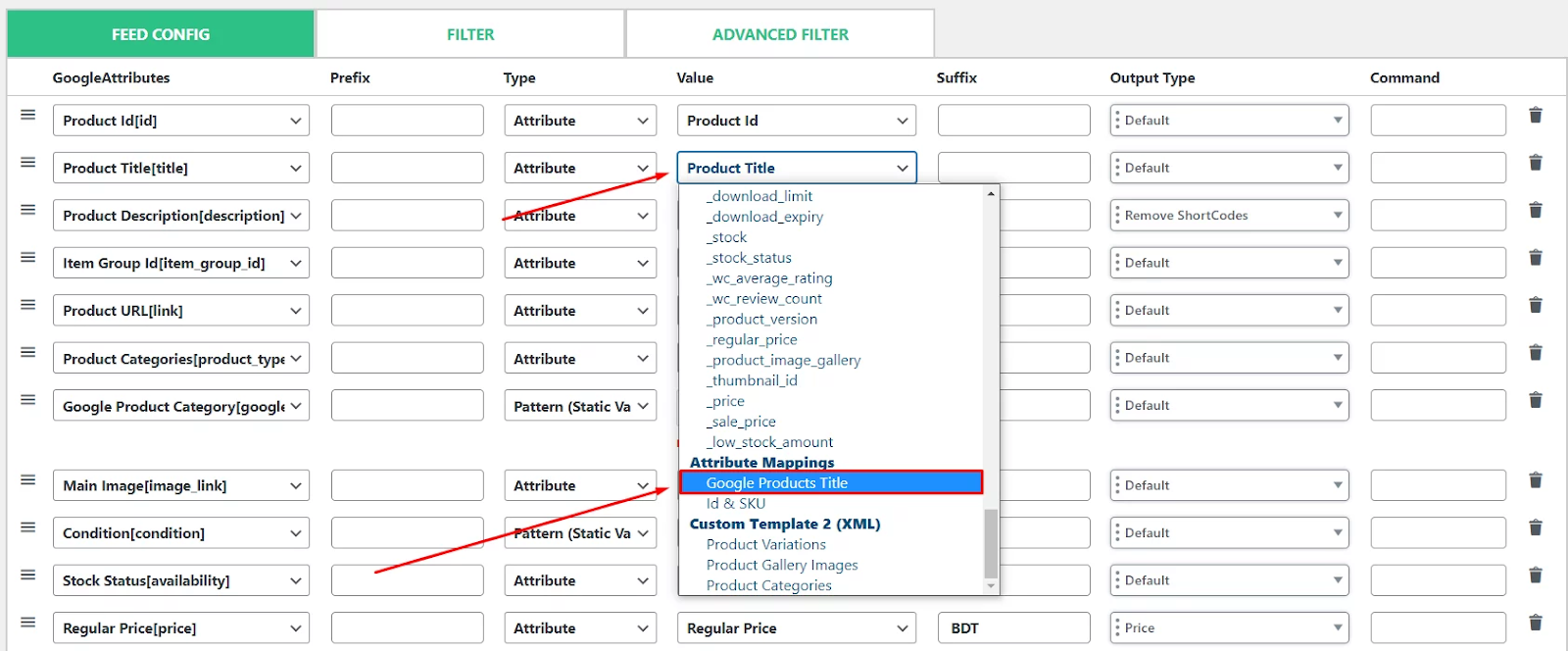
From now on, Google Shopping will display the extended or optimized title you created by CTX Feed Pro.
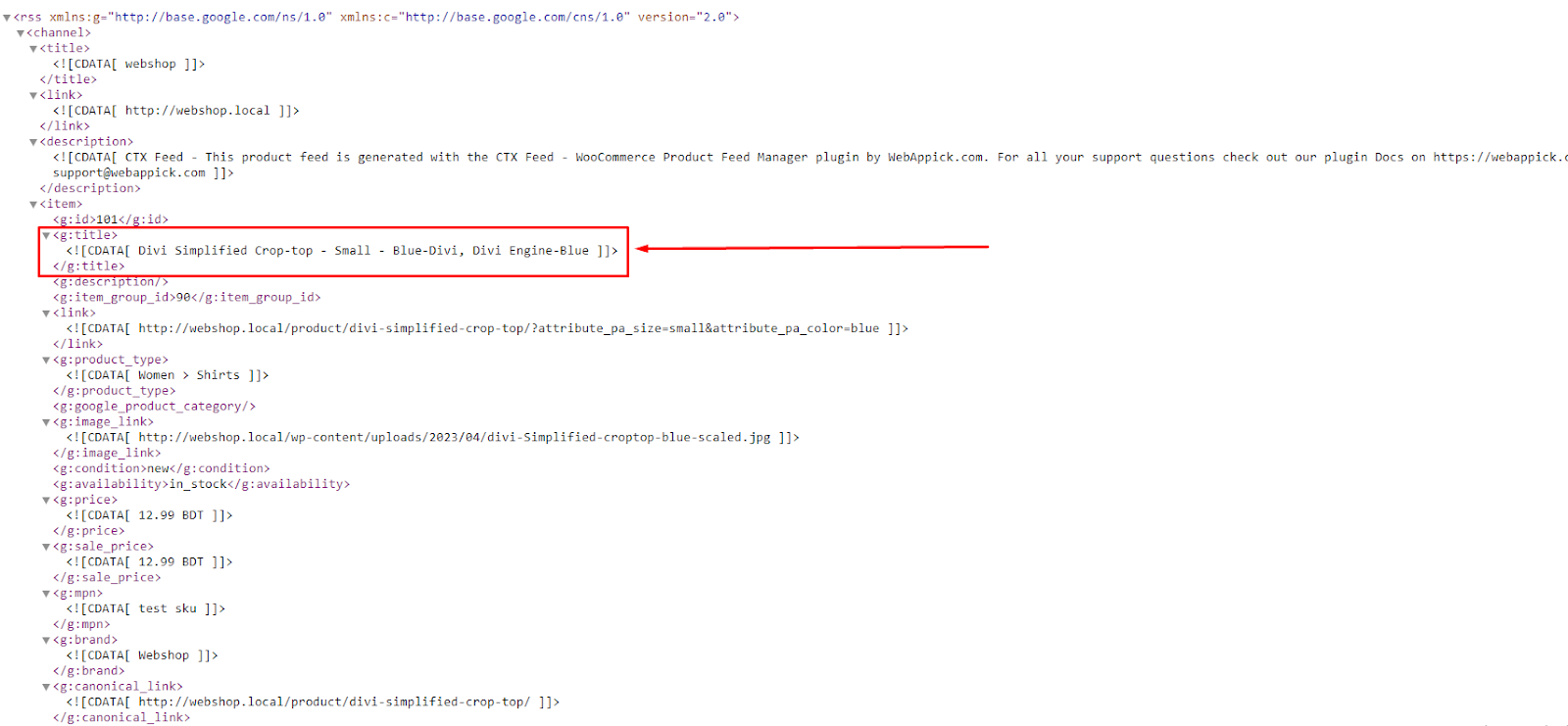
Note:
You can learn more about the product title optimization process from this doc.
Wrapping Up: Drive More Revenue with Optimized Titles
The goal of Google Shopping title optimization is simple: Increase your CTR and lower your CPC by matching user intent perfectly. By front-loading your most important keywords and adhering to the 70-character visibility rule, you ensure your products stand out the moment a shopper hits “Search.”
Key Takeaways to Implement Today:
- Prioritize the first 70 characters for Brand, Product Type, and core attributes.
- Utilize the full 150 characters to feed Google’s algorithm for long-tail queries.
- Follow industry-specific formulas to provide the exact details (Size, Model, Ingredient) your specific customers are looking for.
A well-optimized title is more than just a label—it is the primary data point that determines your ad’s success. Start applying these frameworks to your highest-volume products today to see an immediate impact on your visibility and conversion rates.
Frequently Asked Questions (FAQ)
What is the character limit for Google Shopping product titles?
The absolute maximum limit is 150 characters. However, Google typically only displays the first 70 characters on desktop and fewer on mobile before truncating the text. To maximize performance, place your most critical keywords (Brand, Product Type, and Model) within the first 70 characters.
Can I use promotional text like “Free Shipping” in my product title?
No. Google Merchant Center strictly prohibits promotional language such as “Sale,” “Free Shipping,” “Best Price,” or “Limited Offer” within the title attribute. Including these terms can lead to product disapproval or account suspension. Save promotional details for the [promotion_id] or [shipping] attributes.
Does Google Shopping support capitalization in titles?
While you should use standard title case (capitalizing the first letter of major words), you must avoid excessive capitalization (e.g., “BUY NOW”). Titles in all caps are often flagged as spam by Google’s algorithm and can negatively impact your Ad Quality Score.
How should I structure a title for a skincare or beauty product?
For high-intent skincare searches, use the formula: Brand + Product Type + Key Ingredient + Skin Type + Volume. Example: GlowLabs Vitamin C Brightening Cream – Hyaluronic Acid – For Dry Skin – 1.7oz. This structure ensures that both users and Google’s AI can identify the product’s specific benefit immediately.
Why is my product title not showing up in Google Search?
This usually happens if your title is too vague or lacks relevant keywords. Google matches ads based on the data in your feed, not on a keyword list. If your title doesn’t contain the specific terms users are searching for (like “Waterproof” or a specific “Model Number”), your product may not be triggered for those auctions.
What is the difference between a Title and a Structured Title?
In 2026, Google introduced the [structured_title] attribute. While the standard title is what shoppers see, the Structured Title allows you to provide cleaner data to Google’s AI, specifically flagging content that may be generated or enhanced by algorithmic tools using the digital_source_type tag.