To generate a WooCommerce XML product feed, create an XML file from your WooCommerce product data and include the required attributes, such as product ID, title, description, price, sale price, availability, image URL, product URL, category, brand, and SKU.
The easiest way is to use an XML feed generator plugin. It reads your WooCommerce product data, maps the required fields, creates the XML feed file, and gives you a feed URL that you can submit to marketplaces, shopping engines, and advertising platforms.
In this guide, you’ll learn how to generate a WooCommerce XML product feed in WordPress, add or customize feed attributes, copy the product feed URL, set automatic feed updates, and understand when you need XML feed export instead of XML import.
What Does a WooCommerce XML Feed Look Like?
A WooCommerce XML feed organizes product data inside XML tags.
Here’s a simple WooCommerce XML feed example:
<products>
 <product>
   <id>woo-123</id>
   <title>Running Shoes</title>
   <price>79.00</price>
   <availability>in stock</availability>
 </product>
</products>
Why Create a WooCommerce XML Feed?
A WooCommerce XML feed helps store owners manage product information efficiently across multiple channels.
Keep Product Data Consistent
Instead of updating products separately across different platforms, you can maintain all product information inside WooCommerce and distribute it through a single XML feed.
Save Time
A feed generator automatically builds and updates your XML feed, eliminating repetitive manual work.
Sell Across Multiple Channels
XML feeds make it easier to publish products on marketplaces, shopping engines, social commerce platforms, and affiliate networks.
Improve Data Accuracy
Automated feeds reduce pricing errors, inventory mismatches, outdated images, and incorrect product information.
Simplify Catalog Management
As your product catalog grows, XML feeds help manage thousands of products from one centralized source.
Required Attributes in a WooCommerce XML Feed
A WooCommerce XML feed requires a specific set of data fields (attributes) to be processed correctly. If you miss the core fields, shopping platforms like Google Merchant Center, Facebook, or Pinterest will reject your product catalog instantly.
The baseline rule is simple: You must include at least 5 core attributes for all items, and up to 10 if you sell clothing, manufactured goods, or product variations.
Core Required Attributes (All Products)
| XML Tag Name | Attribute Name | Required For |
|---|---|---|
| <id> | Product ID | All products. Prevents duplicate listings (uses SKU or Post ID). |
| <title> | Product Title | All products. The main product name shoppers see. |
| <link> | Product URL | All products. Direct link to the WooCommerce item page. |
| <image_link> | Image URL | All products. Direct link to the main product image (https://). |
| <price> | Regular Price | All products. Price + currency (must match your site exactly). |
Conditional & Unique Identifiers (Platform Dependent)
Depending on what you sell and where you list it, these tags switch from optional to strictly mandatory:
- <availability>: Value must be in stock, out of stock, or preorder.
- <description>: Detailed product text used by search algorithms to match long-tail queries.
- <condition>: Required if selling non-new items (new, refurbished, or used).
- <brand> / <gtin> / <mpn>: Unique Product Identifiers. For manufactured goods, Google and Bing require you to provide at least two of these (GTIN is your UPC/EAN barcode).
Custom/Handmade Items: If you sell handmade or white-label goods without barcodes, you must include the tag <identifier_exists>false</identifier_exists> to prevent platform rejection.
How to Generate a WooCommerce XML Product Feed
When you have a WooCommerce store, you don’t necessarily have to code your XML product feed file. There are plenty of XML feed generator plugins available that can generate XML feed right from your WordPress WooCommerce admin panel. The best among them is called the CTX Feed.
Login to your WordPress WooCommerce back panel and jump to Plugins>>Add New. Search and find the plugin.
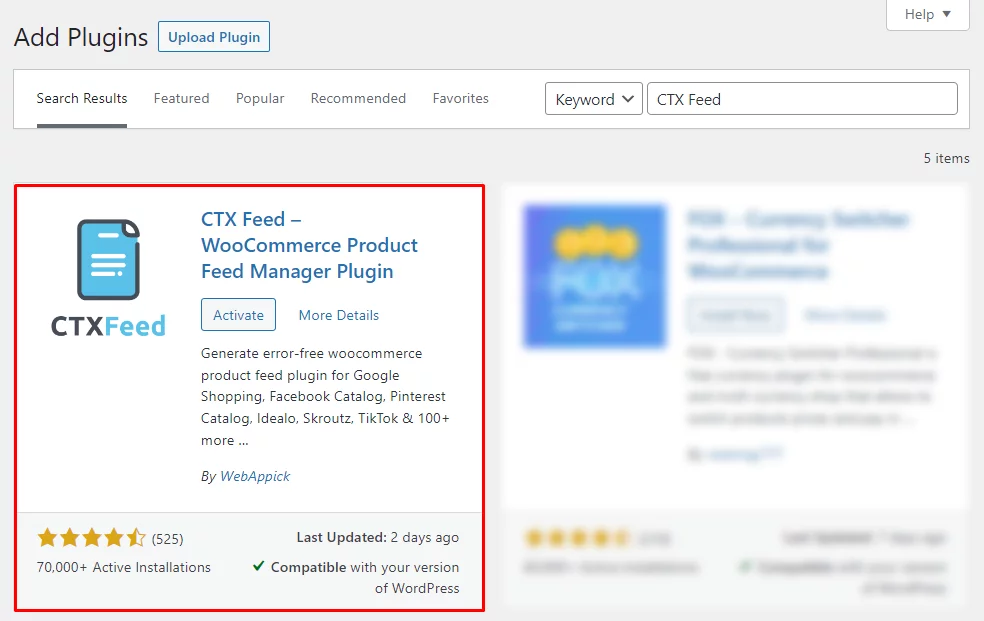
Install and activate it once you find it. After installation, the CTX Feed XML feed generator will create its own dedicated menu in the left panel.

Click on Make Feed, and it will take you to the new feed window.
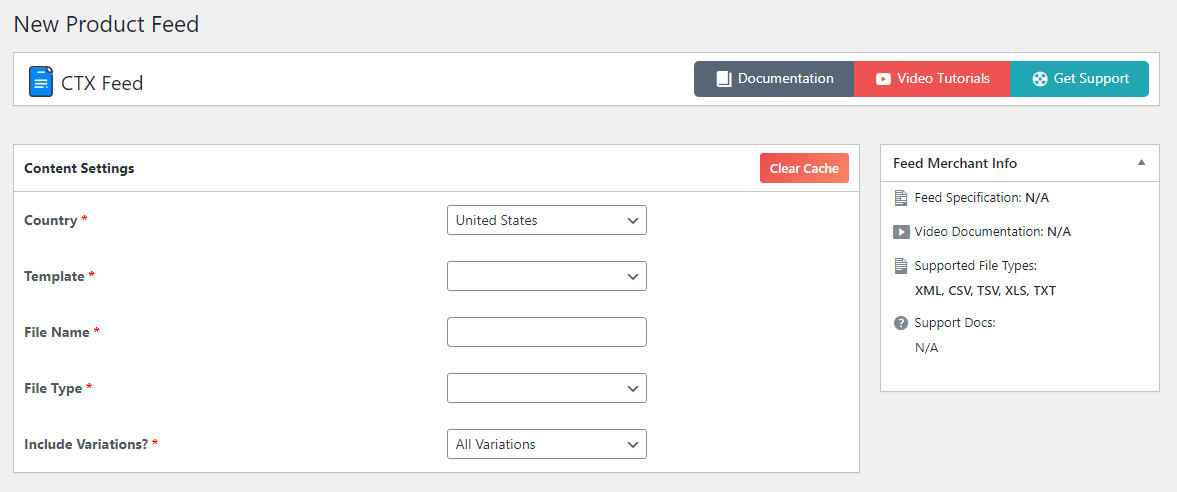
From the Template dropdown, you can select the channel you are creating the feed for. As we are trying to create a sample WooCommerce XML feed, we will select a custom template.
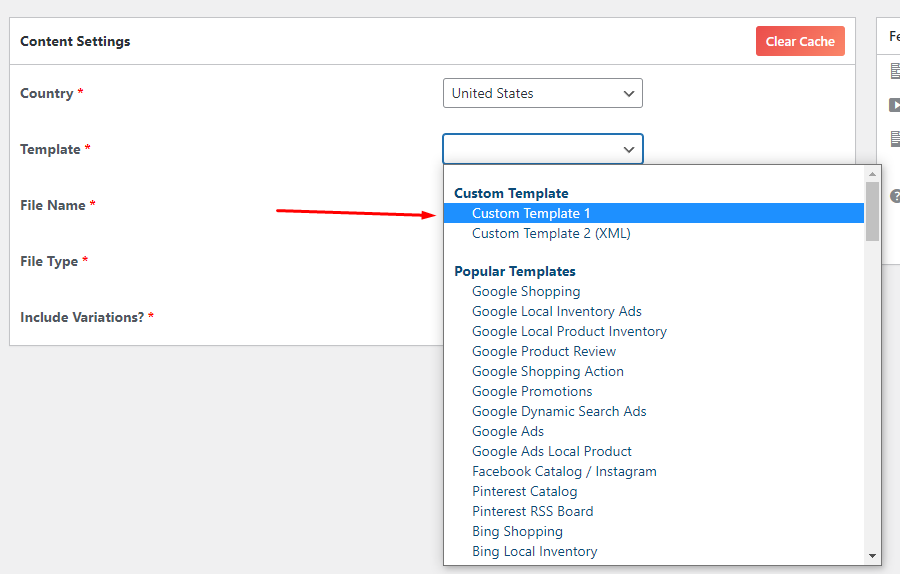
From the file type dropdown, select XML and give your file a name.
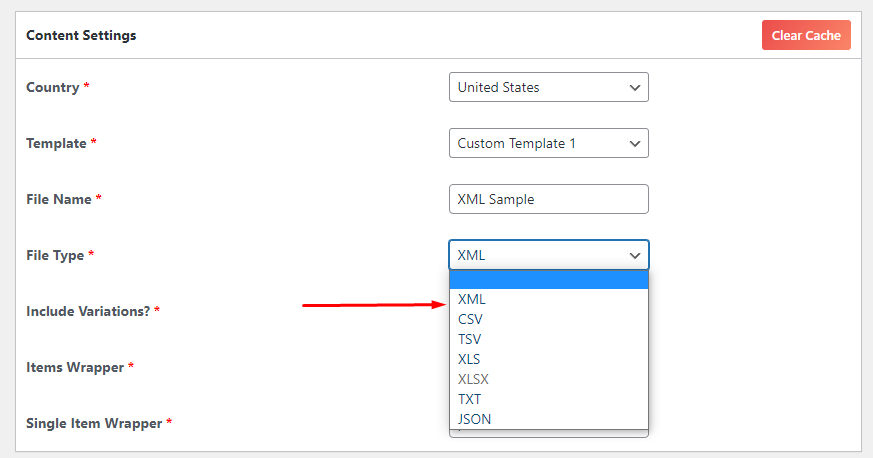
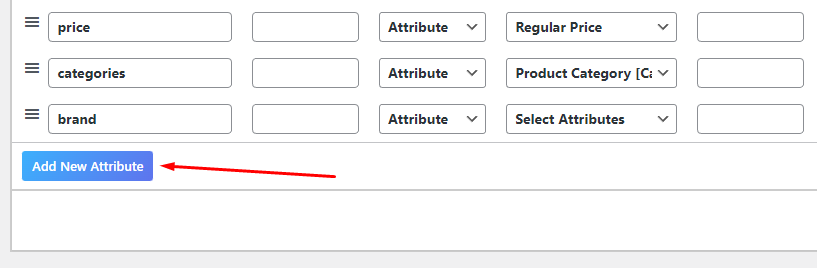
CTX Feed will automatically populate some common attributes for your help at the bottom.

If you want to add more attributes, you can click the Add New Attribute button.
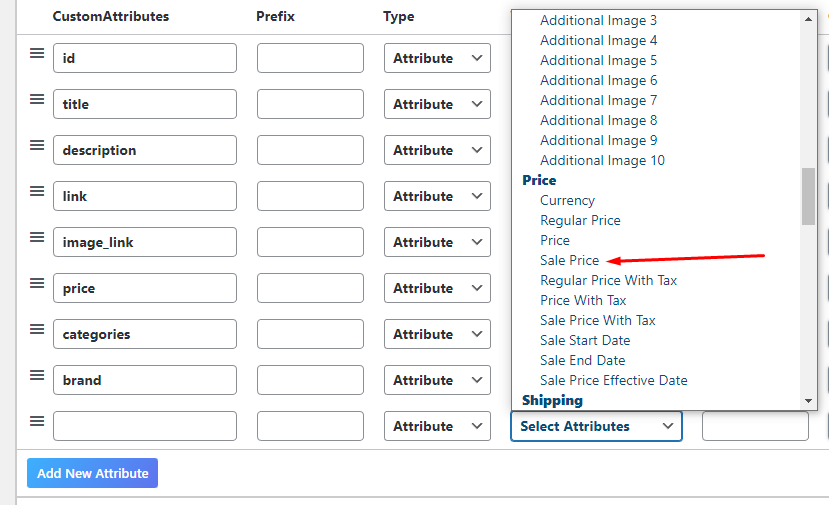
For example, let’s say you want to include the sale price in the feed. Add a new attribute, and from the Attribute dropdown, select sale price.
Give your attribute a name, and when you are done, click on the Update and Generate Feed button to generate XML feed.
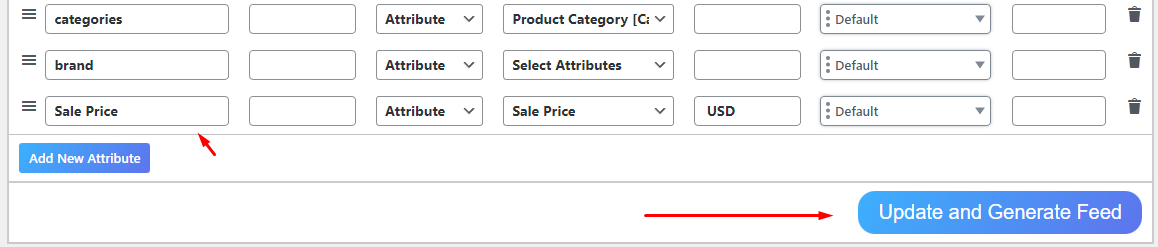
CTX Feed will read your WooCommerce product data and generate the XML feed file automatically.
You can also apply different filters and conditions to create specific product feeds as per your needs.
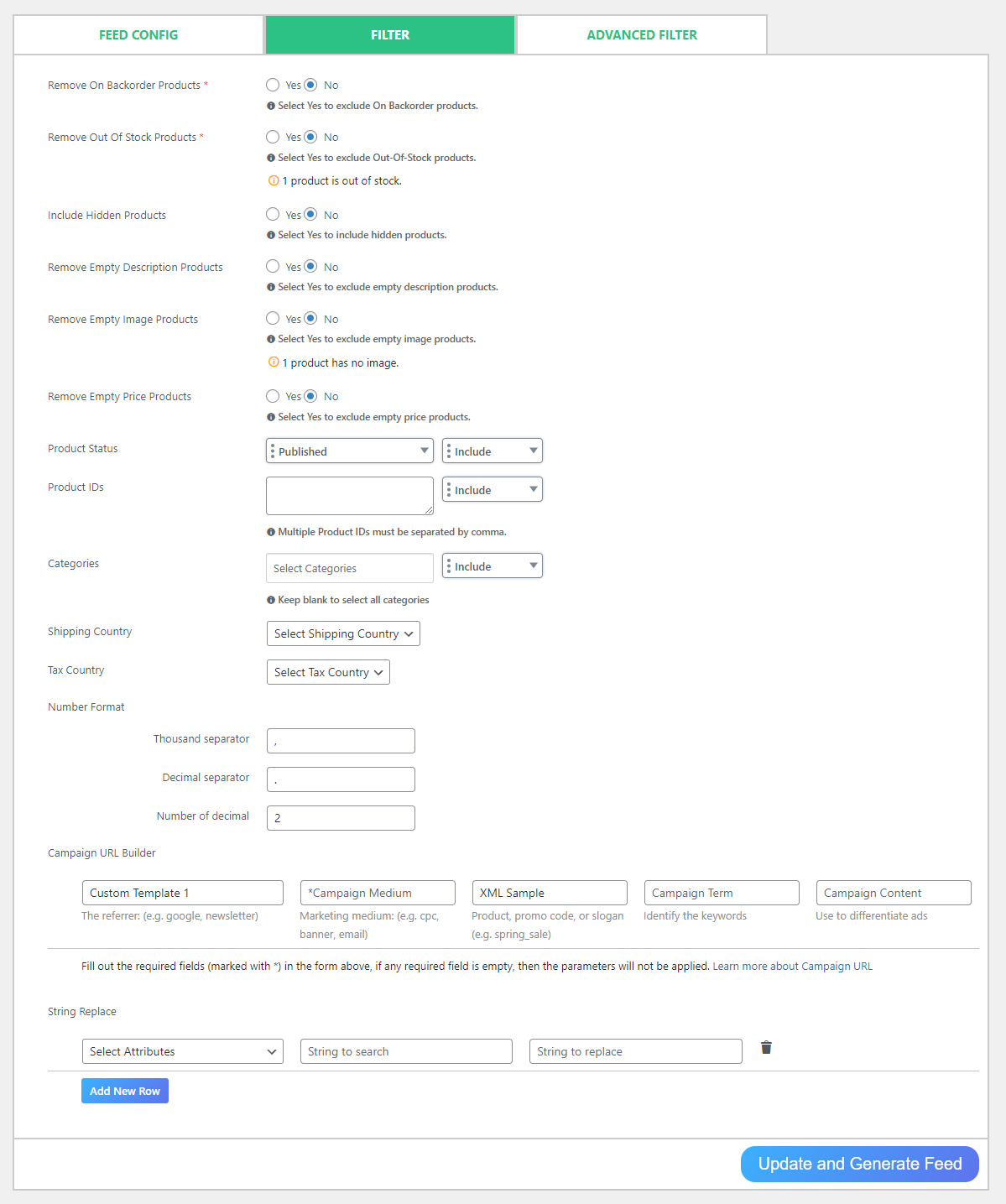
Different feed settings
After generating the feed, go to the Manage Feeds menu, where you will find your new XML feed file.

You can also enable auto-update and interval from that page. For example, if you set the interval to 1 hour, then all your feed files will be updated every hour.
Any changes you make to your product pages within this time, CTX feed will fetch those changes and update the feed files automatically.
From different settings, you can edit, duplicate, delete, view, regenerate, and download the XML feed file. You can also copy the feed URL and connect through the URL/FTP/SFTP/HTTP method to different channels.
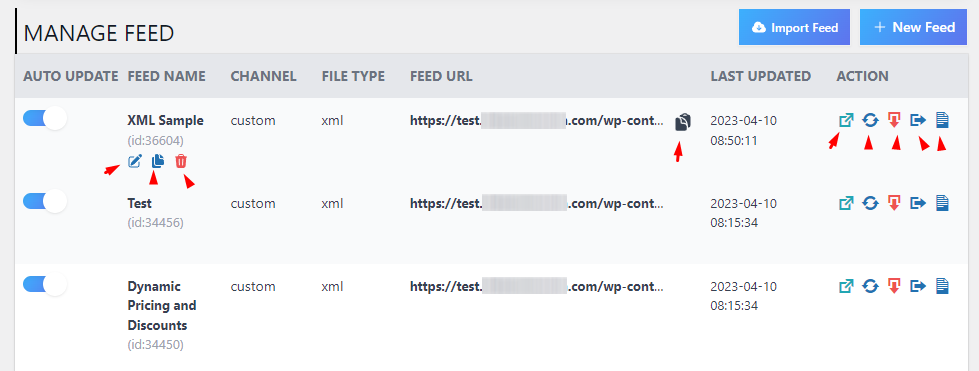
When you connect through one of these methods, you can host your XML feed file on your own server. The greatest advantage of this method is you won’t need to worry about updating anything manually at all.
When you create a new product or make any changes to an existing product, CTX Feed will automatically collect the changes and update feed files. And because you connected through URLs, all your channels will fetch those changes and update their product page automatically.
Also, the following video tutorial shows you how to create an XML product feed for WooCommerce using CTX Feed – Product Feed Generator.
How to Get Your WooCommerce XML Feed URL
Once you generate your product feed, your target marketplace (like Google Merchant Center or Facebook) will ask for your Feed URL. This URL acts as a live, automated pipeline—whenever the platform pings it, it instantly fetches your latest stock and price data.
Finding and copying this link in WordPress takes less than a minute.
Step-by-Step: Copy Your Feed Link
- Go to your WordPress dashboard and navigate to CTX Feed ➔ Manage Feeds.
- Locate the specific XML feed you just created from the list.
- Hover your mouse over the Feed URL column.
- Click the Copy URL icon (or right-click the View link and select “Copy Link Address”).
How to Share the Feed URL
Instead of downloading a static XML file and uploading it manually, you will use this dynamic URL to sync your store with ad networks:
- Google Merchant Center: Paste this link into the “Scheduled Fetch” section when setting up your primary feed source.
- Meta/Facebook Catalog: Choose the “Data Feed” upload method, set a scheduled frequency, and paste the URL.
- Testing: You can paste this URL directly into any browser address bar to view the raw XML structure and verify your product data is active.
WooCommerce XML Feed Example for Google Shopping
A WooCommerce XML product feed contains product information inside XML tags. The structure may vary based on the marketplace or template you use, but the core idea is the same.
Here is a simple WooCommerce product feed XML example:
<products>
 <product>
   <id>woo-123</id>
   <title>Running Shoes</title>
   <description>Lightweight running shoes for daily training.</description>
   <price>79.00</price>
   <sale_price>69.00</sale_price>
   <availability>in stock</availability>
   <image_link>https://example.com/images/running-shoes.jpg</image_link>
   <link>https://example.com/product/running-shoes</link>
   <category>Shoes</category>
   <brand>Example Brand</brand>
   <sku>RS-123</sku>
 </product>
</products>
This is only a basic XML feed example. A real WooCommerce XML product feed for Google Shopping, Facebook, Pinterest, or another channel may require specific tag names, required attributes, optional fields, and formatting rules.
WooCommerce XML Feed Import vs Export
A WooCommerce XML feed is usually used to export product data from your WooCommerce store to another platform. If your goal is to send products to Google Shopping or a comparison shopping engine, you need a product feed export.
WooCommerce XML feed import is different. It means bringing product data from an external XML file into WooCommerce. That usually requires an import plugin or product import tool, not a product feed generator.
Use this simple rule:
| Goal | What You Need |
|---|---|
| Send WooCommerce products to marketplaces or ad platforms | XML product feed export |
| Bring products from another source into WooCommerce | XML product import |
| Keep product data updated across shopping channels | Feed URL with scheduled updates |
| Create a custom product catalog file | XML feed generator |
How to Auto-Update Your WooCommerce XML Feed
You can auto-update your WooCommerce XML feed from the CTX Feed Manage Feeds page. Scheduled updates help keep your product data current without manual work.
For example, if you set the update interval to 1 hour, CTX Feed will update the feed every hour. If you change a product price, stock status, image, or description in WooCommerce, the feed can reflect that change during the next scheduled update.
Auto-updates are useful when your store frequently changes:
- Product prices
- Sale prices
- Stock availability
- Product descriptions
- Product images
- Product categories
- Variable product data
This helps reduce outdated listings across marketplaces, shopping engines, and ad platforms.
Common WooCommerce XML Feed Errors
Most WooCommerce XML feed errors happen because of data gaps in your product pages or formatting bugs inside the XML file. If a feed contains errors, shopping platforms will flag your catalog and suspend your ads.
The rule for a clean feed is simple: Fix the missing data in your WooCommerce product editor first, then regenerate your feed to clear the error.
Top Feed Errors & How to Fix Them
1. Missing Product IDs or SKUs
- The Issue: Platforms reject items that lack a unique identifier.
- The Fix: Go to WooCommerce ➔ Products and ensure every product and variation has a unique SKU under the Inventory tab.
2. Broken or HTTP Image URLs
- The Issue: Your <image_link> tags point to broken images, placeholders, or insecure http:// links.
- The Fix: Ensure your site uses secure https://. Check that your feed plugin is pulling the full featured image, not a deleted thumbnail.
3. Invalid XML Structure (Parsing Errors)
- The Issue: Special characters (like unescaped & or <) or raw HTML in descriptions break the XML file code.
- The Fix: Use your feed plugin settings to strip HTML tags and sanitize description fields automatically before generation.
4. Missing GTIN, Brand, or MPN
- The Issue: Google flags manufactured goods for missing brand names or UPC/EAN barcodes.
- The Fix: Enter the correct barcode into your product data. If the item is handmade/custom, set the <identifier_exists> tag attribute to false.
5. Outdated Availability Data (Mismatched Stock)
- The Issue: The feed says an item is in stock, but your site shows it is sold out, leading to account penalties.
- The Fix: Increase your sync frequency. Change your plugin’s auto-update interval from 24 hours to 1 hour so stock drops map quickly.
Benefits of Using an XML Product Feed for WooCommerce
A WooCommerce XML product feed helps you manage and share product data across multiple channels from one place. This is useful when you sell many products or promote products across different platforms.
Accurate and Consistent Product Information
An XML product feed helps keep product information consistent across sales and marketing channels. Instead of updating product details manually on each platform, you can manage the data in WooCommerce and send it through a feed.
This helps reduce mismatched prices, outdated stock status, missing images, and inconsistent product descriptions.
Faster Product Updates
A feed generator can update the XML file based on a schedule. This means product changes in WooCommerce can be reflected in the feed without rebuilding the file manually.
For stores with frequent product changes, this saves time and reduces errors.
Easier Multi-Channel Selling
A WooCommerce XML feed makes it easier to list products on marketplaces, shopping engines, social media channels, and affiliate platforms.
You can create separate feeds for different channels and adjust attributes, filters, and templates based on each channel’s requirements.
Better Product Data Management
An XML feed lets you manage your product data from one central source: your WooCommerce store.
This makes it easier to update product titles, prices, sale prices, availability, images, categories, and custom attributes without editing separate files for every channel.
No Coding Required
You do not need to write XML code manually if you use an XML feed WooCommerce plugin. CTX Feed can generate the file from your product data and give you the feed URL from the WordPress dashboard.
This makes the process easier for store owners, marketers, and non-technical users.
XML Feed Best Practices for WooCommerce Stores
A WooCommerce XML feed works better when the product data is complete, accurate, and matched to the target channel’s requirements.
Before submitting your feed, check these points:
- Use clear and accurate product titles.
- Keep prices and sale prices updated.
- Use high-quality product images.
- Add correct product URLs.
- Match product categories carefully.
- Add SKU, brand, GTIN, or MPN when available.
- Keep stock status accurate.
- Avoid missing required attributes.
- Use channel-specific templates where possible.
- Schedule automatic feed updates.
A clean product feed can reduce feed errors and make product listings easier for platforms to process.
Best XML Feed Generator Plugin for WooCommerce
CTX Feed is a WooCommerce XML feed generator plugin that helps you create product feeds for marketplaces, shopping engines, social media platforms, and advertising channels without writing XML manually.
It supports XML, CSV, and TXT feed formats, includes prebuilt templates for 130+ channels, and lets you customize product attributes, apply filters, and schedule automatic feed updates.
CTX Feed is useful if you want to generate a WooCommerce product feed XML file, copy the feed URL, and keep your product data updated across multiple channels from your WordPress dashboard.
Key Features
- Create WooCommerce XML feeds without coding.
- Generate product feeds in XML, CSV, and TXT formats.
- Use prebuilt templates for 130+ channels.
- Add or edit product attributes.
- Filter products by category, stock status, price, or visibility.
- Schedule automatic feed updates.
- Copy, download, edit, duplicate, delete, or regenerate feed files.
- Manage multiple feeds for different marketing channels.
CTX Feed has a free version available in the WordPress plugin repository. Paid plans are listed on the official CTX Feed pricing page, so check the official page before publishing final pricing.
Frequently Asked Questions
What Is a WooCommerce XML Feed?
A WooCommerce XML feed is an XML file that contains product information from your WooCommerce store in a structured format that computers and online platforms can easily read.
Does WooCommerce generate an XML feed?
WooCommerce does not include a built-in XML product feed generator for marketplaces and shopping engines. To create a WooCommerce XML feed, you can use an XML feed generator plugin such as CTX Feed. The plugin creates the XML file from your WooCommerce product data.
How do I create an XML feed in WooCommerce?
You can create an XML feed in WooCommerce by installing CTX Feed, going to CTX Feed → Make Feed, selecting a template, choosing XML as the file type, adding product attributes, and clicking Update and Generate Feed. After that, you can manage the feed from Manage Feeds.
How do I get my WooCommerce product feed URL?
After creating the feed in CTX Feed, go to CTX Feed → Manage Feeds. From there, you can copy the WooCommerce product feed URL, view the feed, download it, regenerate it, or edit the feed settings.
What is an XML product feed?
An XML product feed is a structured file that contains product information such as product ID, title, description, price, availability, product URL, image URL, category, brand, and SKU. Marketplaces and shopping platforms use this file to read and update product listings.
Can I use a WooCommerce XML feed for Google Shopping?
Yes, you can use a WooCommerce XML feed for Google Shopping if the feed includes the required Google Merchant Center attributes. A plugin like CTX Feed can help you create a Google Shopping product feed using a channel-specific template.
Is WooCommerce XML feed import the same as product feed generation?
No. WooCommerce XML feed generation usually means exporting your store’s product data to a feed file. XML import means bringing product data from an external XML file into WooCommerce. These are different tasks and may need different tools.
Key Takeaways
- A WooCommerce XML feed helps marketplaces, shopping engines, and ad platforms read your product data automatically.
- The fastest way to generate a WooCommerce XML product feed is to use a feed generator plugin like CTX Feed.
- A good product feed XML file should include ID, title, description, price, sale price, availability, image URL, product URL, category, brand, and SKU.
- The WooCommerce product feed URL lets platforms fetch updated product data directly from your store.
- Scheduled feed updates help keep prices, stock status, images, and product details current.
- XML feed generation is for exporting product data, while XML import is for bringing external product data into WooCommerce.
- CTX Feed helps you create, manage, and update WooCommerce XML feeds directly from your WordPress dashboard.


Free version on WordPress.org. Every Pro licence includes a 30-day money-back guarantee.